Skip to reading
← Milindapañha

7.5.9. The Boar

Mil 7.5.9

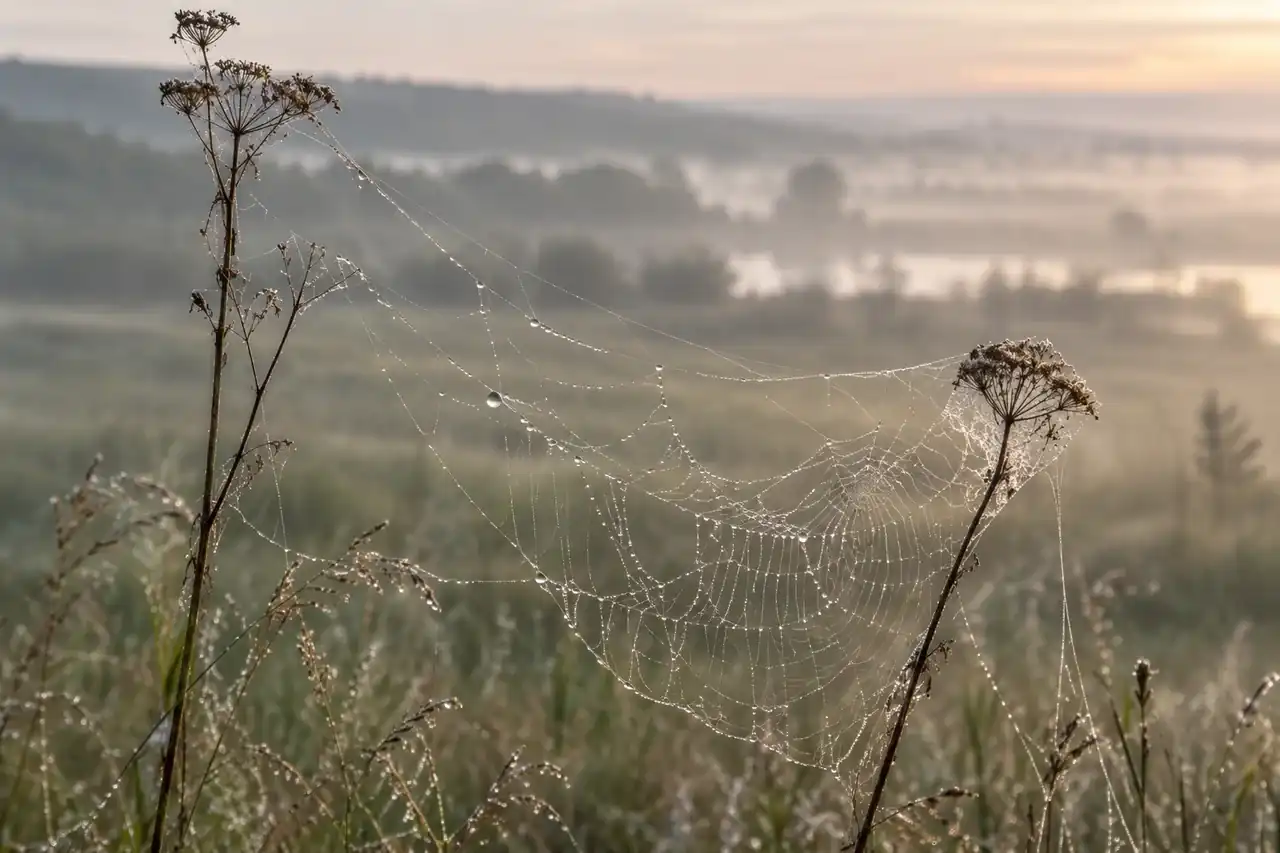
Dew beads on a delicate web between meadow stems.

PTS cs 16 ‘Venerable Nāgasena, those two qualities of the boar you say he ought to take, which are they?’

‘Just, O king, as the boar, in the sultry and scorching weather of the hot season, resorts to the water; just so, O king, should the strenuous Bhikshu, earnest in effort, when his heart is distracted and ready to fall, all in a whirl, inflamed by anger, resort to the cool, ambrosial, sweet water of the meditation on love. This, O king, is the first quality of the boar he ought to have.

PTS cs 17 ‘And again, O king, as the boar, resorting to muddy water, digs into the swamp with his snout, and making a trough for himself, lies down therein; just so, O king, should the strenuous Bhikshu, earnest in effort, put his body away in his mind, and PTS vp En 335 lie down in the midst of contemplation. PTS vp Pali 398 This, O king, is the second quality of the boar he ought to have. For it was said, O king, by Piṇḍola Bhāradvaja, the Elder:

“Alone, with no one near, the man of insight,
Searching into and finding out the nature
Of this body, can lay him down to rest
On the sweet bed of contemplations deep.”’

Connections

Collection & context

About this edition

Translation by T.W. Rhys Davids · SuttaCentral · Public domain

The source expressly identifies this translation as public domain.

The Questions of King Milinda, translated from the Pali by T.W. Rhys Davids.

Part 1 (to section 5.4.10) was originally published as Volume xxxv of “The Sacred Books of the East”, Oxford, The Clarendon Press, 1890.

Part 2 (from section 5.5.1) was originally published as Volume xxxvi of “The Sacred Books of the East”, Oxford, The Clarendon Press, 1894.

This SuttaCentral edition was prepared by Bhikkhu Sujato based on the digital text of the Internet Sacred Text Archive. The work of the Sacred Text Archive to make this text publically available is gratefully acknowledged.

In preparing this edition minor editorial changes have been made. The structure has been adapted to agree with the Mahāsaṅgīti Pali text as found on SuttaCentral. In addition, the corrections proposed by the translator in the “Addenda et Corrigenda” of the original editions have for the most part been adopted.

This text is in the public domain. You are free to do whatever you wish with it.

Prepared for SuttaCentral by Bhikkhu Sujato.

Published source. Translation wording and order are preserved; source headings and notes are retained, with navigation and formatting adapted for this reader.

The opening image is AI-generated nature artwork for Buddhist Atlas, an evocative companion rather than a historical depiction.