c. 5th century BCE · dates debatedNorthern Indian subcontinent
Taught a path from suffering to freedom through ethical living, meditation and wisdom.
Details
The teacher whose awakening and path of ethical conduct, meditation and wisdom form the shared foundation of Buddhist traditions. Early discourses preserve teachings attributed to him; later biographies also contain devotional and legendary material.
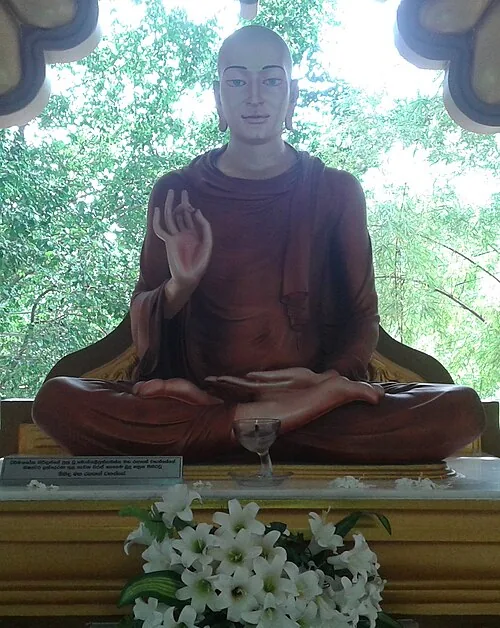
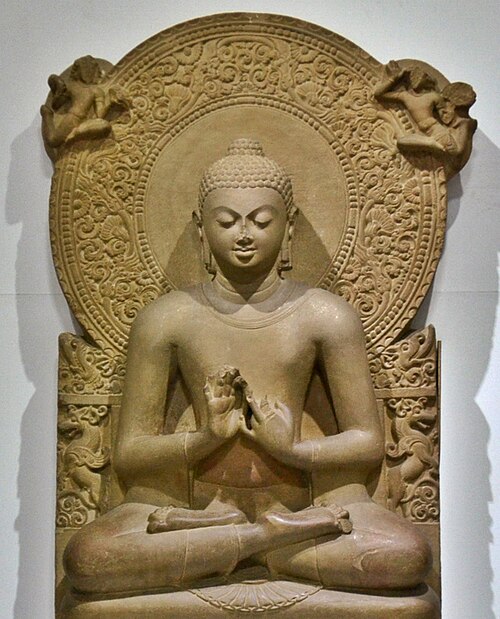
Traditional depiction · seated Buddha at Sarnath Museum; photograph from 2013
Tevaprapas Makklay / Wikimedia Commons; crop by APPU. CC BY-SA 3.0. Wikimedia's 500-pixel preview of the cropped photograph, reproduced without further changes.
Early Buddhist community · dates uncertainNorthern India
The Buddha’s devoted attendant, remembered for preserving his discourses through recitation.
Details
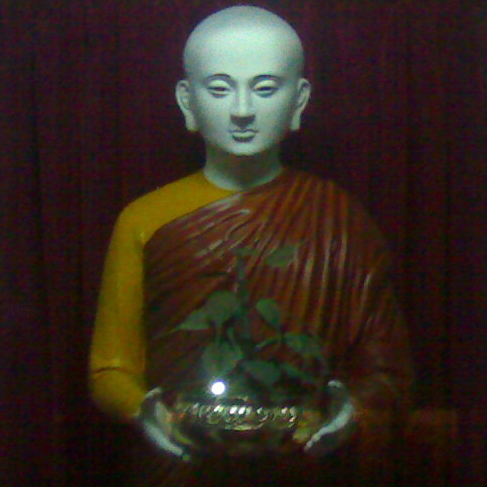
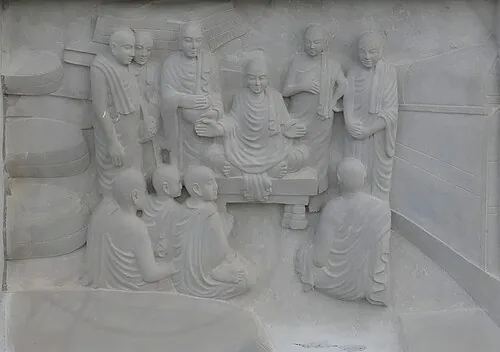
Remembered as the Buddha’s attendant and a key reciter of discourses in traditional accounts of the first council. Those accounts are later transmitted narratives.
Early Buddhist community · dates uncertainNorthern India
Early texts remember her pioneering role in establishing the Buddhist community of nuns.
Details
Early Buddhist accounts describe her as the Buddha’s foster mother and the first ordained Buddhist nun. These transmitted narratives are central to the history and self-understanding of women’s monastic communities.
Early Buddhist community · dates uncertainNorthern India
Made subtle teachings clear, becoming one of the early community’s foremost voices of wisdom.
Details
Presented in early Buddhist texts as one of the Buddha’s two chief male disciples, especially associated with wisdom and the careful explanation of the Dhamma. Many discourses depict him teaching both monastics and laypeople.
Early Buddhist community · dates uncertainNorthern India
An early nun celebrated for wisdom, whose dialogue with a king probes the limits of describing awakening.
Details
Presented in early Buddhist texts as one of the Buddha’s chief female disciples, especially associated with wisdom. Discourses and verses attributed to her preserve teachings associated with women in the early Buddhist community.
Early Buddhist community · dates uncertainNorthern South Asia
Remembered for ascetic practice and leadership at the first council; later Chan traditions honor him as their first Indian patriarch.
Details
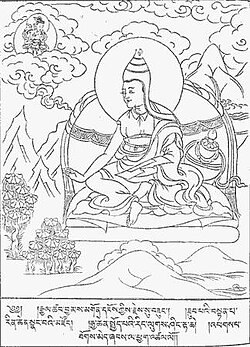
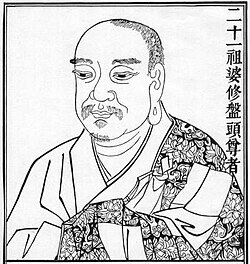
A senior disciple associated with austere practice and care for the early monastic community. Vinaya accounts place him at the head of the council held after the Buddha’s death, where the teachings and discipline were recited. Later Chan and Zen lineages honor him as the first Indian patriarch. These accounts belong to different textual periods; the later transmission stories are not contemporary biographies.
Early Buddhist community · dates uncertainNorthern South Asia
One of the Buddha’s two chief male disciples, remembered for meditation and for teaching alongside Sāriputta.
Details
Also known as Maudgalyāyana, he and Sāriputta are presented in early texts as the Buddha’s two chief male disciples. Accounts emphasize his meditative abilities and extraordinary powers, understood within Buddhist religious tradition. Later East Asian stories about rescuing his mother helped shape practices of offering and dedication for deceased relatives. His significance spans early meditation teaching and later devotional life.
Early Buddhist community · dates uncertainNorthern South Asia
Remembered as an authority on monastic discipline and the reciter of the Vinaya at the first council.
Details
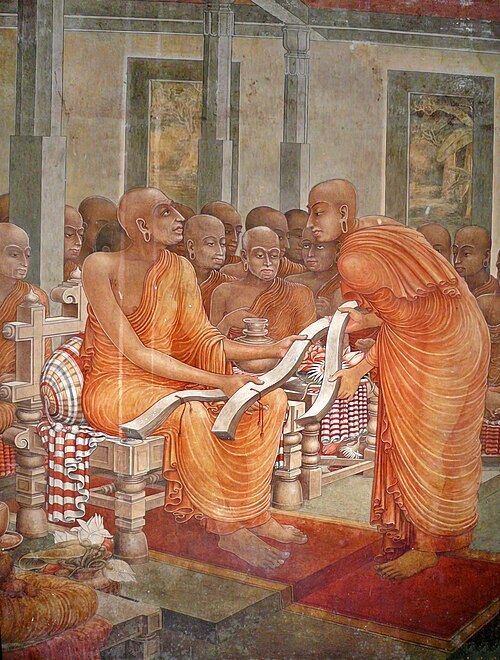
Early Buddhist accounts present Upāli as a former barber who became a monk and a leading authority on the Vinaya, the community’s discipline. Council narratives assign him the recitation of its rules after the Buddha’s death. His story links the preservation of monastic practice with the principle that standing in the community rests on training and ordination, rather than inherited social rank.
Father of Saṅghamittā · Traditional account. Sri Lankan chronicles describe Saṅghamittā as Aśoka’s daughter; the narrative postdates their lifetimes. Source for Aśoka and Saṅghamittā ↗
3rd century BCE · traditional chronologyIndia · Sri Lanka
Sri Lankan chronicles credit him with establishing a Buddhist monastic community that became central to Theravāda transmission.
Details
A monk remembered in Sri Lankan chronicles as the son of Aśoka and brother of Saṅghamittā. They describe his arrival during the reign of Devānampiya Tissa and his role in establishing Buddhist teaching and monastic life on the island. Sri Lanka became a major center for preserving Pāli texts and transmitting Theravāda. The surviving chronicles were written centuries after the events they narrate.
Theravāda tradition associates him with the Third Council, the Kathāvatthu and the transmission of Buddhism under Aśoka.
Details
An elder remembered in Theravāda chronicles as Aśoka’s adviser, Mahinda’s preceptor and the leader of the Third Council. The tradition associates him with the Kathāvatthu, a collection of doctrinal debates. These roles come from later transmitted accounts and should not be treated as contemporary documentation.
3rd century BCE · traditional accountsIndia · Sri Lanka
Sri Lankan chronicles credit her with bringing the Bodhi tree branch and establishing a community of nuns.
Details
Remembered in Sri Lankan chronicles as Aśoka’s daughter, a nun who brought a branch of the Bodhi tree to Sri Lanka and helped establish the nuns’ order. The surviving narratives were written centuries after her lifetime.
Daughter of Aśoka · Traditional account. This family relationship is preserved in Sri Lankan chronicles written after their lifetimes. Source for Saṅghamittā and Aśoka ↗
Dialogue set in the 2nd century BCE · historicity uncertainNorthwestern Indian subcontinent
The Milindapañha presents his dialogue with King Milinda, using memorable analogies to explain Buddhist teachings.
Details
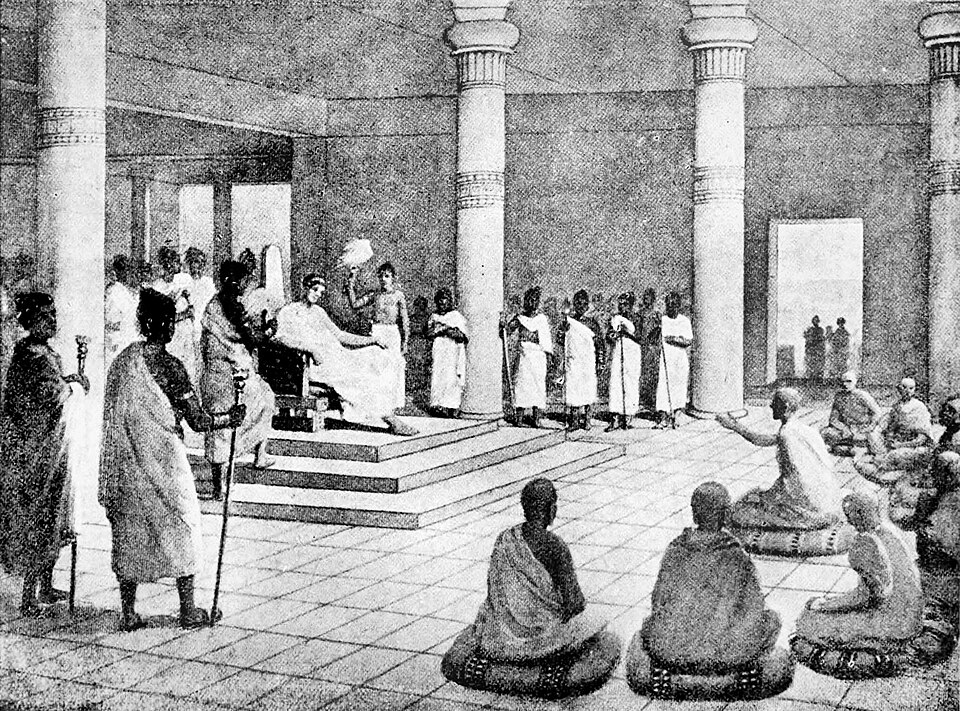
The monk who answers King Milinda’s questions in the Milindapañha, a Buddhist dialogue compiled around the beginning of the Common Era. His explanations use analogies to explore identity, wisdom and practice. The literary setting should be distinguished from a securely established biography; the text’s authorship is unknown.
Traditional depiction · Nāgasena and King Milinda in a later historical illustration by Horace van Ruith; not a contemporary likeness.
Horace van Ruith; Hutchinson’s Story of the Nations, via Wikimedia Commons.. Public-domain artwork and scan. Wikimedia preview reproduced without further changes.
Brought Buddhist teaching into classical Sanskrit poetry through the Buddhacarita and Saundarananda.
Details
A poet and dramatist whose Buddhacarita tells the life of the Buddha in Sanskrit verse, while the Saundarananda follows Nanda’s transformation through Buddhist training. His literary work helped communicate the path through character, emotion and narrative. His precise dates and school affiliation remain uncertain. The Awakening of Faith is traditionally attributed to him, but that authorship is disputed and should not be treated as established.
Examined how things depend on conditions, challenging the idea that anything possesses an independent, fixed essence.
Details
An influential Madhyamaka philosopher. His reasoning examines emptiness: the lack of independent, inherent existence. Known for the Fundamental Verses on the Middle Way.
Work translated by Kumārajīva · Translation. Kumārajīva translated the Fundamental Verses into Chinese in 409 CE. Source for Nāgārjuna and Kumārajīva ↗
Influenced Tsongkhapa · Influence. Tsongkhapa wrote the Ocean of Reasoning commentary on Nāgārjuna’s Fundamental Verses. Source for Nāgārjuna and Tsongkhapa ↗
Flourished c. 3rd century CEIndia · traditionally associated with Sri Lanka
Developed early Madhyamaka through the Four Hundred Verses, joining practical training with examination of philosophical views.
Details
Author of the Four Hundred Verses, which connects Buddhist practice with criticism of fixed views. Traditional biographies identify him as a disciple of Nāgārjuna; Candrakīrti later commented on his work. His life is sparsely documented, and he should be distinguished from later tantric authors bearing the same name.
c. 4th–early 5th centuries CEChina · Central Asia · India · Sri Lanka
Traveled to India for monastic texts and left an influential account of Buddhist communities across Asia.
Details
A Chinese monk who set out in 399 to seek Buddhist scriptures, especially more complete texts of monastic discipline. He traveled through Central Asia, India and Sri Lanka before returning by sea, then worked on translation. His Record of Buddhist Kingdoms preserves observations of monasteries, pilgrimage sites and practice. Together, the texts he brought back and his travel account helped connect Chinese Buddhism with its wider Asian world.
Made influential Chinese translations of Indian scriptures, including the Lotus Sūtra.
Details
A monk and translator whose Chinese versions of works such as the Lotus Sūtra and Madhyamaka treatises helped shape East Asian Buddhism. His translation teams made Indian Buddhist thought accessible in influential Chinese formulations.
Translated work by Nāgārjuna · Translation. His Chinese translation helped carry Nāgārjuna’s Fundamental Verses into East Asian Buddhism. Source for Kumārajīva and Nāgārjuna ↗
Image credit
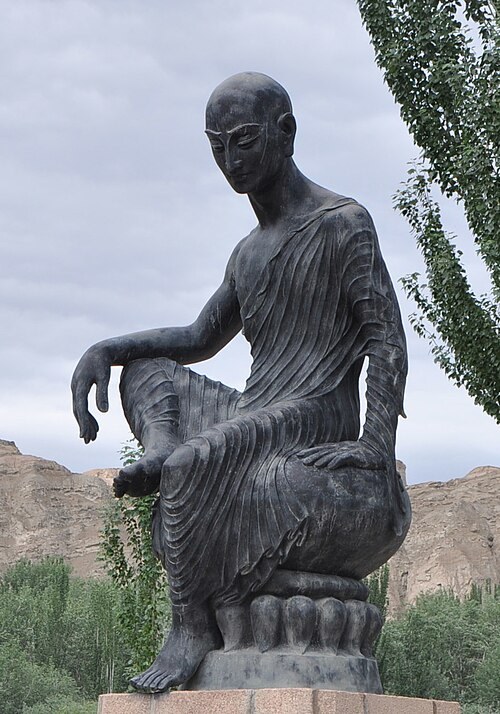
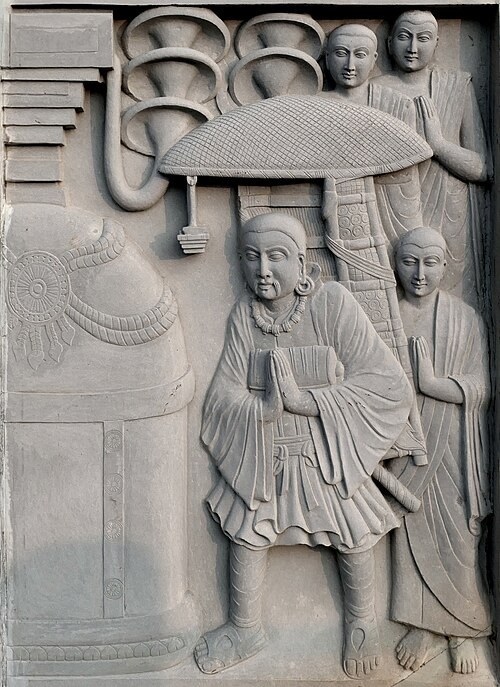
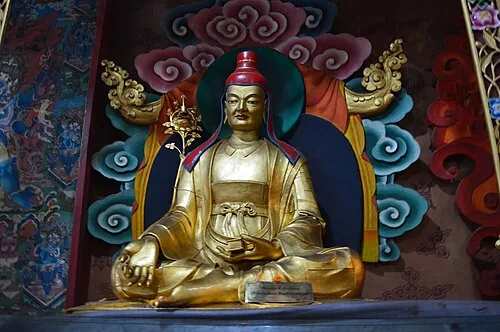
Statue of Kumārajīva at the Kizil Caves, Kuqa.
Yoshi Canopus; crop by Thyj. CC BY-SA 3.0; Resized for web display
Organized Yogācāra teachings on consciousness, meditation and the bodhisattva path.
Details
A major systematizer of Yogācāra, examining experience, consciousness and the bodhisattva path. The Mahāyānasaṃgraha is among his influential works; some textual attributions are debated.
Elder half-brother of Vasubandhu · Traditional account. Traditional biographies describe the brothers and Asaṅga’s role in Vasubandhu’s turn toward Yogācāra; historians debate these accounts. Source for Asaṅga and Vasubandhu ↗
Image credit
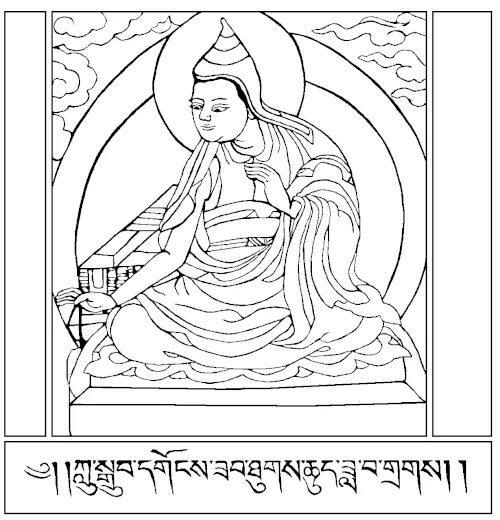
Traditional painting of Asaṅga visited by Maitreya.
Unknown artist. Public domain; Resized for web display
Connected detailed analysis of experience with Yogācāra’s investigation of consciousness.
Details
An influential philosopher associated with the Abhidharmakośa and works on cognition and experience. His writings connect Abhidharma debates with the development of Yogācāra; the chronology of his life and works is debated.
Younger half-brother of Asaṅga · Traditional account. The family relationship comes from traditional biographies whose historical details are debated. Source for Vasubandhu and Asaṅga ↗
Work translated by Xuanzang · Translation. Xuanzang translated Vasubandhu’s Twenty Verses and Thirty Verses on Consciousness Only into Chinese. Source for Vasubandhu and Xuanzang ↗
Image credit
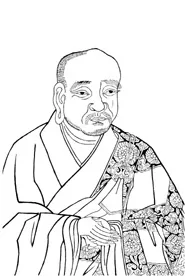
Chinese illustration of Vasubandhu as a Zen patriarch.
Unknown artist. Public domain; Resized for web display
Established an influential Buddhist account of knowledge, perception and inference that transformed philosophical debate in India and Tibet.
Details
Dignāga asked how we can distinguish reliable knowledge from mistaken thinking. His work systematized perception and inference as ways of knowing and examined how concepts and language organize experience. His Compendium of Valid Cognition became a foundation for later Buddhist logic, especially Dharmakīrti’s work. These arguments shaped debate with other Indian philosophical schools as well as later Tibetan scholastic training.
Lineage ancestor of Huineng · Traditional account. Chan lineage histories place Bodhidharma first and Huineng sixth among the Chinese patriarchs. Source for Bodhidharma and Huineng ↗
Image credit
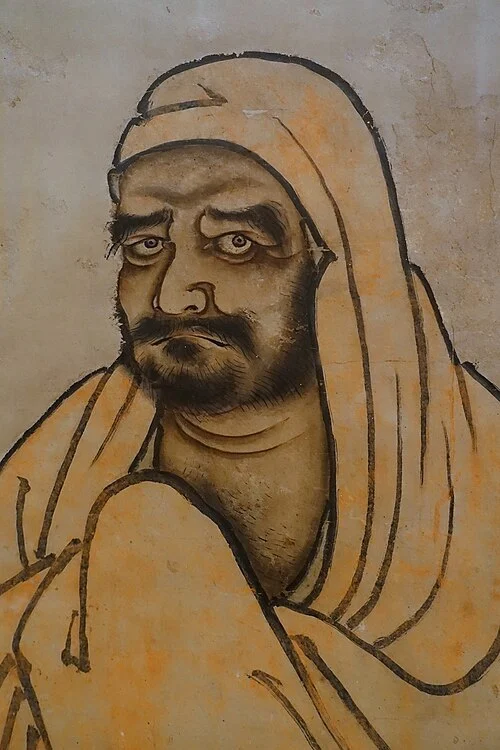
Traditional depiction · Unkei Ikkei, Japan, 1504–1520
Unkei Ikkei; photograph by Daderot. Public domain artwork; photograph CC0 1.0; resized and converted to WebP
Applied formal reasoning to Madhyamaka, shaping debates about how to explain and establish emptiness.
Details
A Madhyamaka philosopher who used formal inference to defend the emptiness of inherent nature. His interpretation of Nāgārjuna became a focus of later debate with Candrakīrti. The designation Svātantrika belongs to later Tibetan classifications, rather than a school he named himself.
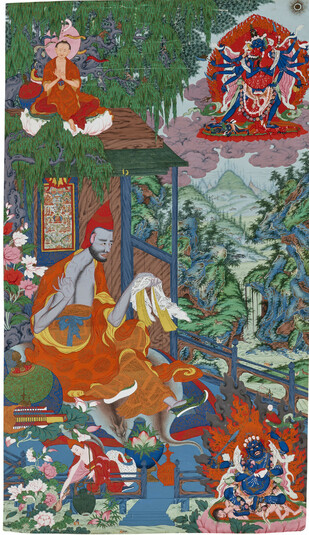
Traditional depiction · Bhāviveka in an eighteenth-century Tibetan painting; not a contemporary likeness.
Private collection, via Himalayan Art Resources, item 24953.. Unaltered 535-pixel identifying thumbnail. Cited educational, non-commercial use under Himalayan Art Resources’ published policy and fair-use limits; image rights remain with the lending collection. Not an open-license image.
Influenced Nichiren · Influence. Nichiren practice draws on Zhiyi’s interpretation of the Lotus Sūtra and the threefold truth. Source for Zhiyi and Nichiren ↗
Image credit
Traditional painting of Zhiyi, founder of the Tiantai school.
Unknown artist. Public domain; Resized for web display
Developed Buddhist reasoning about reliable knowledge, causation and perception, deeply influencing Indian and Tibetan philosophical study.
Details
Building on Dignāga, Dharmakīrti examined what makes a perception or inference trustworthy. His Commentary on Valid Cognition and other works connect arguments about knowledge with Buddhist concerns such as impermanence, suffering and liberation. He became a central author for Tibetan debate and study, while also influencing non-Buddhist Indian philosophers. His chronology and the interpretation of his philosophical positions remain subjects of scholarship.
Interpreted Nāgārjuna’s teaching of emptiness in works that became central to Tibetan Madhyamaka study.
Details
A Madhyamaka author known for the Clear Words commentary on Nāgārjuna and the Introduction to the Middle Way. He examines the consequences of taking things to exist independently and explains how emptiness relates to ordinary experience and the bodhisattva path. His influence grew especially in later Tibetan traditions. The label Prāsaṅgika reflects a later Tibetan classification, rather than a school he formally founded.
602–664 · birth date debatedChina · Central Asia · India
Translated Indian Buddhist philosophy into Chinese, deepening East Asian study of consciousness.
Details
A pilgrim and scholar who traveled from China to India, studied at Nālandā and returned with Buddhist texts. His translations and travel account shaped Chinese Buddhist learning and preserve valuable evidence about seventh-century Asia.
Translated work by Vasubandhu · Translation. Xuanzang translated Vasubandhu’s Twenty Verses and Thirty Verses on Consciousness Only into Chinese. Source for Xuanzang and Vasubandhu ↗
Writings studied by Wonhyo · Influence. Wonhyo independently studied and critically engaged with Xuanzang’s Yogācāra teachings. Source for Xuanzang and Wonhyo ↗
Student of Śīlabhadra · Teacher–student relationship. Xuanzang studied Yogācāra with the Nālandā abbot Śīlabhadra. Source for Xuanzang and Śīlabhadra ↗
Image credit
Depiction of Xuanzang at Buddhavanam Stupa, Telangana.
Anandajoti Bhikkhu. CC BY-SA 4.0; Resized for web display
Made devotion to Amitābha and recitation of the Buddha’s name central to later Chinese and Japanese Pure Land traditions.
Details
An influential Pure Land teacher and commentator on the Contemplation Sūtra. He emphasized reliance on Amitābha’s vows and the practice of reciting the Buddha’s name, while also teaching other devotional practices. His writings became especially important to Hōnen and Shinran in Japan. Pure Land traditions interpret his legacy in different ways, but his work is a shared reference point across them.
Sought harmony among competing Buddhist teachings through his philosophy of One Mind.
Details
A Korean monk and prolific writer who sought to reconcile competing Buddhist interpretations. His commentaries and efforts to share practice beyond elite monastic settings deeply influenced Korean Buddhism.
Engaged with writings of Xuanzang · Influence. His independent study included critical responses to Xuanzang’s Yogācāra teachings. Source for Wonhyo and Xuanzang ↗
Image credit
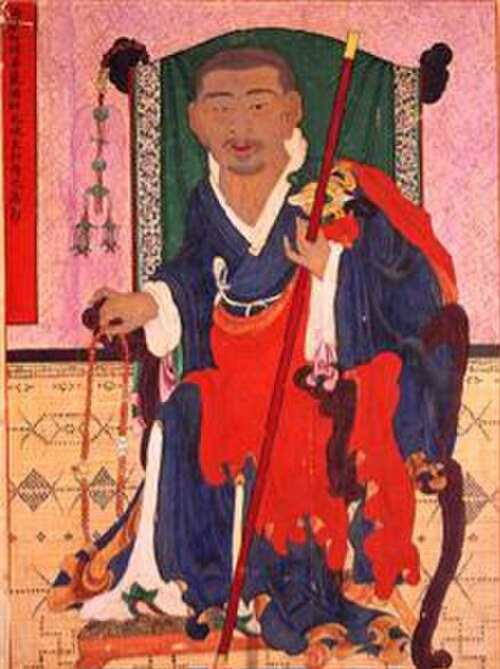
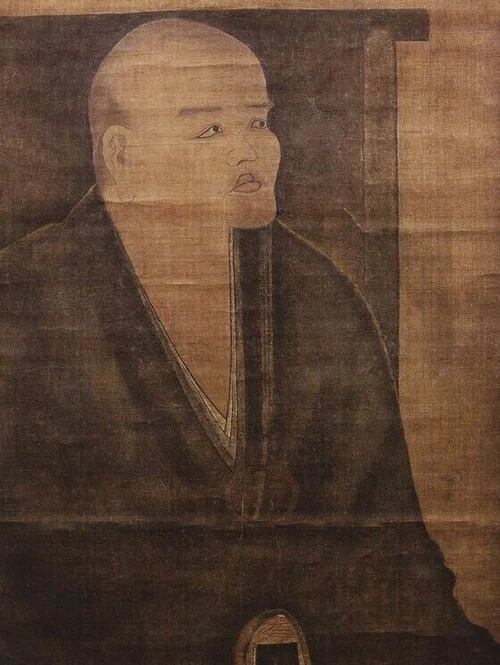
Portrait of Wonhyo at Beomeosa, dated 1863.
Unknown artist; Korea Heritage Service. Public domain; Resized for web display
Taught Yogācāra at Nālandā, including to the Chinese pilgrim and translator Xuanzang.
Details
A scholar and abbot of Nālandā who taught Yogācāra to the Chinese pilgrim Xuanzang. Their teacher–student relationship helped carry Indian Buddhist learning into the Chinese translation tradition. Accounts of Śīlabhadra also contain religious legends, and his exact lifespan is uncertain.
Helped establish the Tibetan Empire; remembered in Buddhist tradition as an early royal patron.
Details
A seventh-century ruler whose expansion helped establish the Tibetan Empire. Tibetan Buddhist tradition remembers him as an early royal patron of Buddhism and an emanation of Avalokiteśvara. Later accounts combine imperial history with religious narratives.
Regarded as an emanation of Avalokiteśvara · Traditional account. A devotional identification in Tibetan Buddhist tradition, represented in later art. Source for Songtsen Gampo and Avalokiteśvara ↗
Image credit
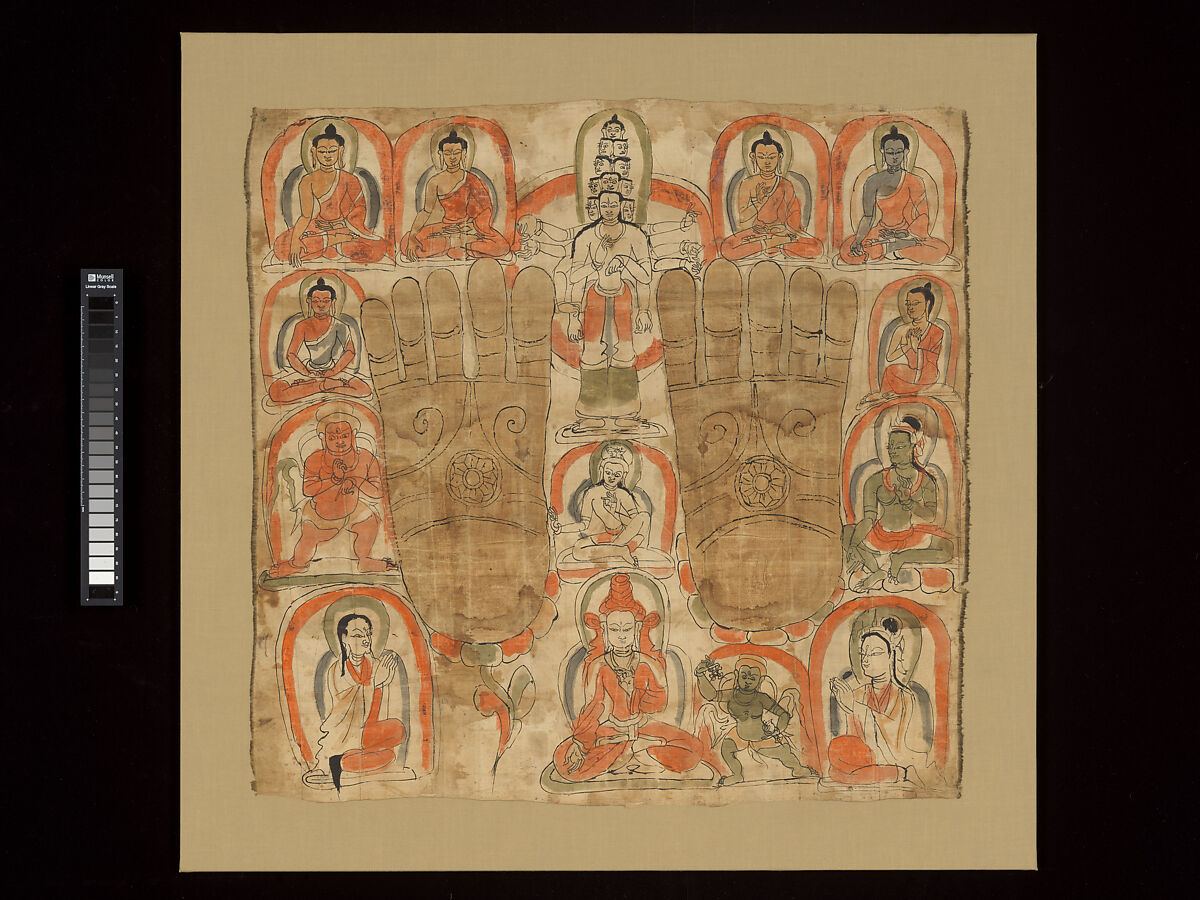
Later devotional painting, likely depicting Songtsen Gampo beneath Avalokiteśvara · Tibet, 10th–11th century
The Metropolitan Museum of Art, accession 2019.291. Public domain (CC0); museum image reproduced unchanged.
Chinese Buddhist pilgrimage · Vinaya · Translation
I-ching · I-tsing
635–713China · India · Southeast Asia
Recorded monastic life across India and Southeast Asia, studied at Nālandā, and translated Buddhist works into Chinese.
Details
A Chinese monk, traveler and translator who studied at Nālandā for about a decade and also worked in Srivijaya, on Sumatra. His writings describe Buddhist monastic rules and daily life, preserving valuable evidence about Indian and Southeast Asian Buddhist communities. He translated Buddhist texts into Chinese after his travels.
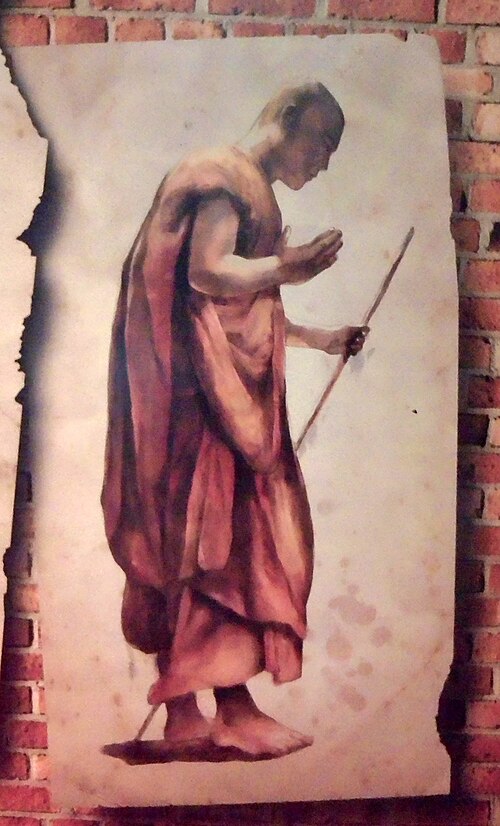
Traditional depiction · Yijing in a later museum illustration exhibited in Jakarta in 2017; not a contemporary likeness.
Gunawan Kartapranata / Wikimedia Commons; National Museum of Indonesia exhibition.. CC BY-SA 4.0 photograph. Wikimedia’s 500-pixel preview, reproduced without further changes.
The Platform Sūtra presents him as a voice of sudden awakening and Chan’s sixth patriarch.
Details
Remembered as Chan’s sixth patriarch and associated with the Platform Sūtra. The text and his biography developed through later editorial and lineage histories.
In the lineage of Bodhidharma · Traditional account. Chan lineage histories place Huineng sixth in a Chinese succession beginning with Bodhidharma. Source for Huineng and Bodhidharma ↗
Image credit
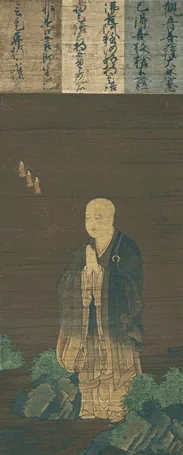
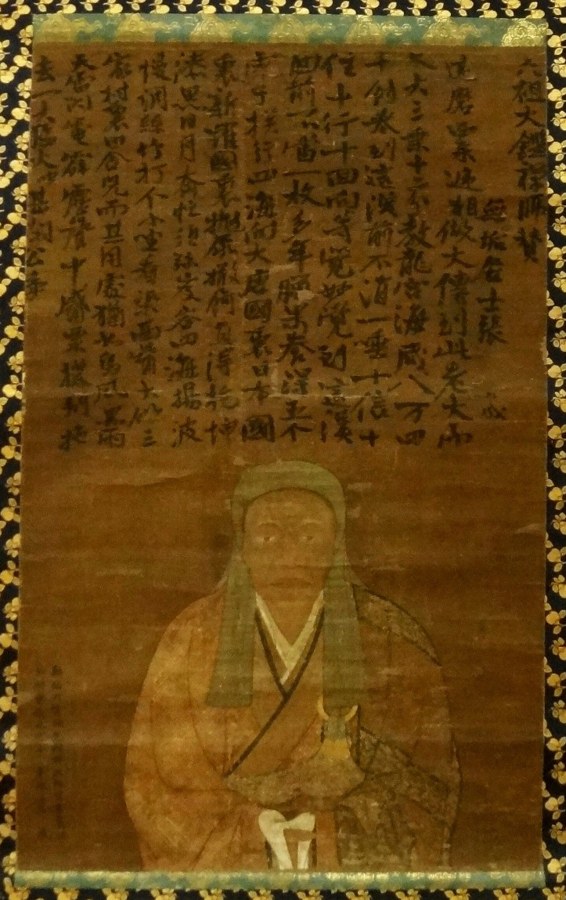
Traditional painting of Huineng (Daikan Zenji), attributed to 1198; Shōfukuji, Japan.
Anonymous Kamakura-period artist. Public domain; Resized for web display
Systematized Huayan thought, explaining how each phenomenon relates to the whole through teachings associated with the Avataṃsaka Sūtra.
Details
A scholar and teacher traditionally counted as Huayan’s third patriarch. His explanations of the Avataṃsaka Sūtra developed a vision of the mutual dependence and interpenetration of phenomena. The Essay on the Golden Lion uses a crafted object and its material to explore the relation between particular things and their underlying nature. His writing and teaching helped establish Huayan as a distinctive East Asian Buddhist tradition.
Turned the bodhisattva ideal into vivid poetry on compassion, patience and wisdom.
Details
Indian Mahāyāna author of the Bodhicaryāvatāra, often translated as The Way of the Bodhisattva. It explores generosity, patience, compassion and wisdom.
Combined Madhyamaka, Yogācāra and Buddhist logic, and helped establish monastic Buddhism at Samye in Tibet.
Details
An Indian scholar and abbot whose work brought Madhyamaka reasoning into conversation with Yogācāra and Buddhist theories of knowledge. Invited to Tibet, he played a foundational role in establishing Samye monastery and its ordination community. Tibetan tradition remembers his collaboration with Padmasambhava in this early transmission. His philosophical synthesis became an important resource for later Tibetan thinkers, even where they disagreed with it.
Explained the gradual cultivation of compassion, calm abiding and insight in the Stages of Meditation.
Details
An Indian philosopher and student of Śāntarakṣita whose Stages of Meditation treatises explain a path combining compassion, calm abiding and insight. He commented on his teacher’s philosophical works. Tibetan narratives associate him with the debate at Samye; the competing accounts should not be read as a settled transcript of one decisive encounter.
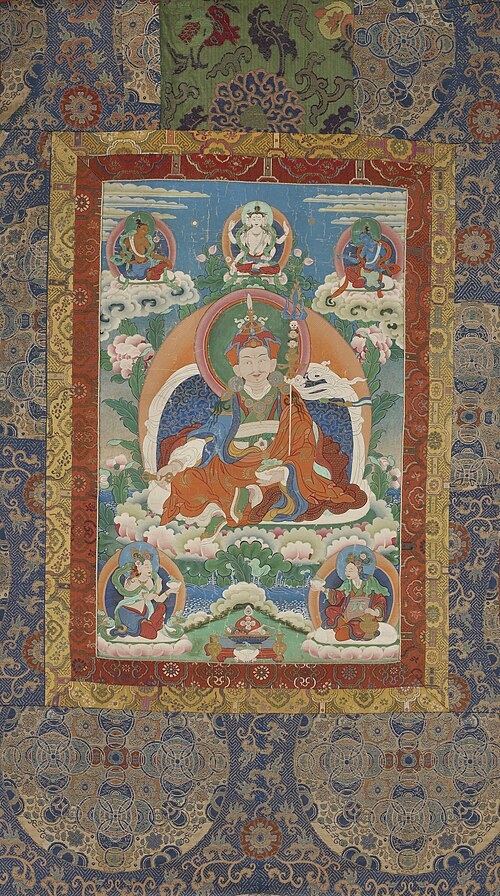
8th century · biography includes legendIndia · Tibet
Remembered as Guru Rinpoche, the tantric master central to Nyingma accounts of Buddhism’s establishment in Tibet.
Details
Central to Nyingma accounts of the establishment of tantric Buddhism in Tibet. Remembered as Guru Rinpoche; devotional biographies contain extensive legendary material.
Teacher of Yeshe Tsogyal · Traditional account. Her later religious biographies describe receiving and preserving Padmasambhava’s teachings. Source for Padmasambhava and Yeshe Tsogyal ↗
Established Japanese Tendai at Mount Hiei, creating a center of learning from which several later Japanese traditions emerged.
Details
After studying in China, Saichō developed the Tendai tradition in Japan around Mount Hiei and Enryakuji. He brought together Lotus Sūtra teaching, meditation, precepts and ritual, and advocated ordination based on bodhisattva precepts. Mount Hiei subsequently became a formative training environment for founders of Japanese Pure Land, Zen and Nichiren traditions. He is also known by the title Dengyō Daishi.
Nyingma tradition remembers her as an awakened teacher who preserved Padmasambhava’s teachings for future generations.
Details
A major female teacher and awakened exemplar in Nyingma tradition, closely associated with Padmasambhava. Her biographies combine religious teaching, memory and legend. The surviving life stories are much later, and her historical life is difficult to reconstruct.
Student of Padmasambhava · Traditional account. Her detailed biographies were written centuries later and present her as a principal disciple and teacher. Source for Yeshe Tsogyal and Padmasambhava ↗
Image credit
Traditional depiction · Lhakhang, University of Texas at El Paso
Ignutius (photographer). CC BY-SA 4.0; resized and converted to WebP
8th century · later biography partly legendaryIndia · Tibet
Wrote Prajñāpāramitā commentaries and became a foundational figure in later Nyingtik Dzogchen transmission accounts.
Details
An Indian scholar and translator associated with Tibet’s early Buddhist transmission. Early catalogues support his authorship of Prajñāpāramitā commentaries; his central place in Nyingtik Dzogchen rests on later traditions, and many textual attributions remain disputed.
Biography written by Longchenpa · Textual evidence. Longchenpa’s Jewel Rosary History preserves a later religious account of Vimalamitra’s life. Source for Vimalamitra and Longchenpa ↗
Image credit
Vimalamitra in a modern Tibetan drawing, dated 1960 or later; a traditional depiction.
Himalayan Art Resources, item 79631; image courtesy of a private collection. Small identifying image for educational commentary, linked to the source. Rights remain with the image owner; no open reuse license asserted. Downloaded unchanged.
A formative ancestor of Caodong Chan, the Chinese lineage from which Japanese Sōtō Zen developed.
Details
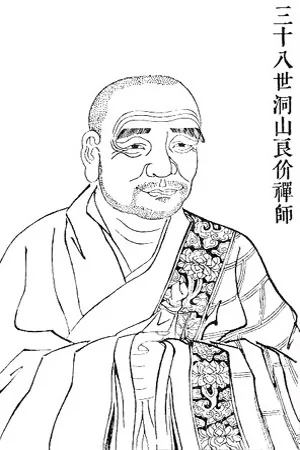
Known in Japan as Tōzan Ryōkai, Dongshan is remembered as a founding teacher of the Caodong lineage. Teachings associated with him explore the relationship between ordinary distinctions and a less divided understanding of experience. Later collections of his sayings and lineage poetry shaped Chan practice and its Sōtō transmission. These materials developed over time, so their traditional attribution does not always establish direct authorship.
His recorded teachings became a defining resource for Linji Chan and Japanese Rinzai Zen.
Details
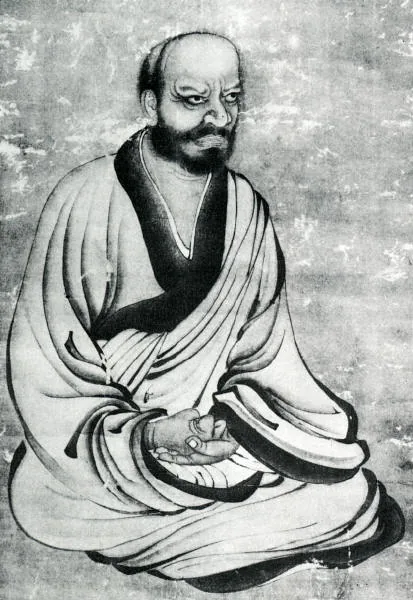
A Chan teacher remembered for direct exchanges that challenge dependence on fixed ideas and external authority. The Record of Linji preserves teachings and encounter stories compiled and transmitted by later generations. Lineages bearing his name became influential in China, Korea, Vietnam and Japan. The dramatic dialogues should be read as a developed teaching literature, rather than a verbatim record of every historical encounter.
Medieval India · possibly 10th century; dates debatedIndia
Songs attributed to him shaped Tibetan Mahāmudrā teachings on the nature of mind.
Details
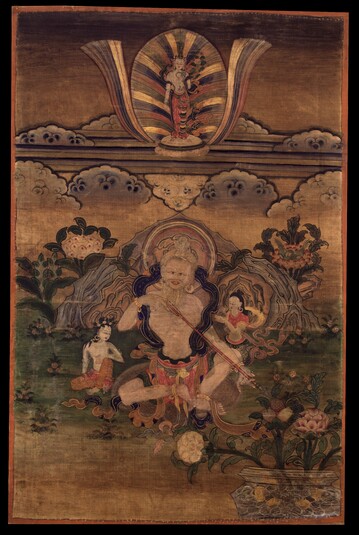
A tantric poet associated with dohā songs that became influential in Tibetan Mahāmudrā. His historical identity, dates and the authorship of works attributed to him are uncertain; later Tibetan biographies combine teaching narratives with legend.
10th–early 11th century · exact dates uncertainSuvarṇadvīpa · maritime Southeast Asia
Taught Atiśa the cultivation of bodhicitta, helping shape the inheritance of Kadam mind training.
Details
A Buddhist teacher of bodhicitta remembered in Tibetan tradition as Serlingpa, the master from the Golden Isles. Atiśa studied with him for twelve years according to traditional biographies, and carried this inheritance into the transmission that later developed as Kadam mind training. He is also known as Dharmakīrtiśrī or Suvarṇadvīpa Dharmakīrti, and is distinct from the earlier Indian philosopher Dharmakīrti. Many accounts locate him in Sumatra; research by Iain Sinclair argues for Kedah on the Malay Peninsula within the wider Śrīvijaya world. His precise dates and location remain subjects of historical research.
Traditional depiction of Dharmakīrti of Suvarṇadvīpa; not a portrait from life.
Courtesy of Orgyen Tobgyal Rinpoche, via Lotsawa House; artist not identified. Small identifying image reproduced unchanged for cited educational biography. Rights remain with the image owner; no open reuse license asserted.
Set out a graduated path to awakening that shaped Kadam and later Tibetan teachings.
Details
A Buddhist monk and scholar from Bengal whose work in Tibet helped shape the Kadam tradition. His Lamp for the Path to Enlightenment organized Buddhist practice into a graduated path and influenced later lamrim literature. Traditional biographies recount twelve years of training in bodhicitta with Serlingpa, Dharmakīrtiśrī of Suvarṇadvīpa, before his return to India and later journey to Tibet. His teachings emphasize refuge, ethical discipline, compassion and the resolve to awaken for the benefit of all beings.
Make plain your own failings,
But don’t look for faults in others.
988–1069 · traditional datesIndia · teachings transmitted to Tibet
Transmitted Mahāmudrā and tantric instructions to Nāropa, establishing a foundation for the Kagyu teaching lineage.
Details
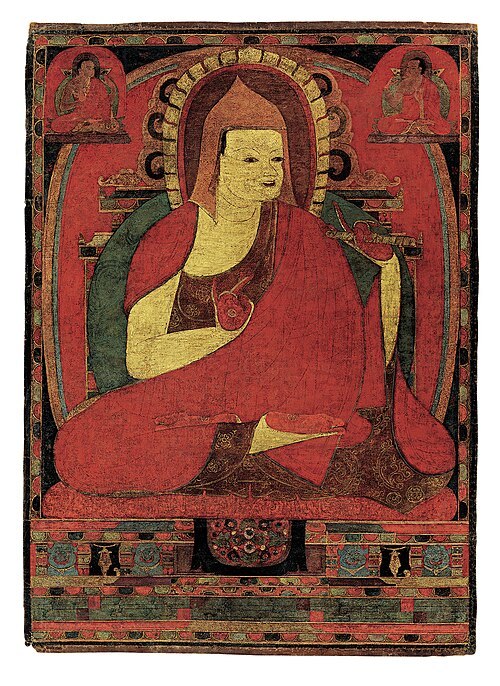
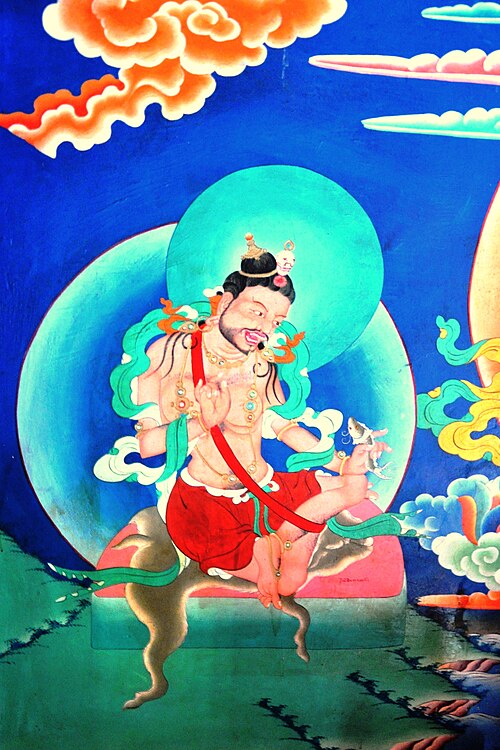
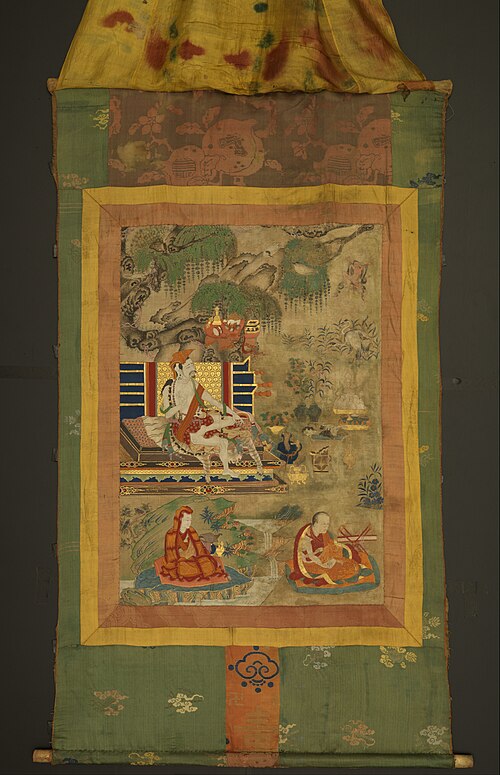
Indian tantric adept remembered in Kagyu lineage accounts as Nāropa’s teacher and a source of Mahāmudrā instruction. Teachings attributed to him include the Six Words of Advice, also known as the Six Nails. His transmission reached Tibet through Nāropa and Marpa. Traditional biographies include visionary and legendary episodes.
Marpa Lotsāwa · Marpa Chökyi Lodrö · the Translator
11th century · traditional dates varyTibet · studied in India and Nepal
Translated Indian Buddhist teachings into Tibetan and transmitted Nāropa’s and Maitripa’s instructions to students including Milarepa.
Details
Tibetan translator and householder whose journeys to India and Nepal helped bring tantric teachings into Tibet. Kagyu accounts identify Nāropa and Maitripa among his principal teachers and Milarepa among his students. His translations and teaching transmission form a central part of the inheritance developed by later Kagyu lineages.
Student of Nāropa · Traditional account. Marpa’s lineage biography names Nāropa among his principal teachers in India. Source for Marpa and Nāropa ↗
Teacher of Milarepa · Traditional account. Kagyu biographies describe Milarepa receiving tantric instruction from Marpa. Source for Marpa and Milarepa ↗
Image credit
Traditional depiction of Marpa by Karshu Gonpo Dorje; a later devotional image.
Karshu Gonpo Dorje; The Treasury of Lives / Wikimedia Commons. Public domain; web-sized reproduction
Naropa · associated with the Six Dharmas / Six Yogas
11th century · traditional dates varyIndia · teachings transmitted to Tibet
Transmitted teachings associated with the Six Yogas and Mahāmudrā to Marpa, helping shape the Kagyu inheritance.
Details
Indian Buddhist scholar and tantric adept associated with the Six Dharmas, also called the Six Yogas of Nāropa. Kagyu lineage accounts describe him as a student of Tilopa and a principal teacher of the Tibetan translator Marpa, through whom his transmission reached Milarepa. His influence extends across Tibetan tantric traditions. Traditional biographies combine lineage history with visionary and legendary episodes.
Student of Tilopa · Traditional account. Kagyu biographies identify Tilopa as Nāropa’s principal tantric teacher. Source for Nāropa and Tilopa ↗
Teacher of Marpa · Traditional account. Marpa’s lineage biography names Nāropa among his principal teachers in India. Source for Nāropa and Marpa ↗
Traditionally described as brother of Niguma · Traditional account. Sarah Harding supports this reading of Tibetan sources while emphasizing the uncertainty surrounding Niguma’s biography. Source for Nāropa and Niguma ↗
Image credit
Traditional depiction · Kham region, eastern Tibet, 19th century. A later devotional image, not a portrait from life.
Unknown Tibetan artist; Rubin Museum of Himalayan Art, C2005.20.4; Google Art Project / Wikimedia Commons. Public domain; web-sized reproduction
c. 10th–11th centuries · dates uncertainKashmir · Tibetan transmission
Teachings attributed to her, including Six Yogas and Mahāmudrā, underpin Shangpa Kagyu practice.
Details
A woman teacher whose attributed Six Yogas and Mahāmudrā instructions form a foundation of Shangpa Kagyu. Later accounts place her in Kashmir and describe Khyungpo Naljor as her student; little about her life can be established independently.
Traditionally described as sister of Nāropa · Traditional account. Sarah Harding supports this reading of Tibetan sources while emphasizing the uncertainty surrounding Niguma’s biography. Source for Niguma and Nāropa ↗
Image credit
Niguma in a seventeenth-century Tibetan manuscript illumination; a later traditional depiction.
His songs and life story made sustained meditation and personal transformation central themes of the Kagyu inheritance.
Details
Tibetan yogi and poet central to Kagyu memory. His songs and life story make transformation through sustained practice a vivid teaching theme. The best-known biography was compiled centuries after his lifetime; its religious narratives do not establish every event as historical fact.
Student of Marpa · Traditional account. Kagyu biographies describe Milarepa receiving tantric instruction from Marpa. Source for Milarepa and Marpa ↗
Teacher of Gampopa · Traditional account. Gampopa’s biography describes his study with Milarepa after training in the Kadam tradition. Source for Milarepa and Gampopa ↗
Teacher of Rechungpa · Traditional account. Rechungpa and Gampopa are named as Milarepa’s principal disciples. Source for Milarepa and Rechungpa ↗
Image credit
Traditional depiction · Tibet or Nepal, 19th century
Unknown artist; Los Angeles County Museum of Art, M.82.165.2; crop by Tibet Nation. Public domain
Developed the Chöd tradition, bringing generosity and wisdom to the practice of loosening attachment to self.
Details
A Tibetan woman teacher central to the development of Chöd, a practice that works with fear and attachment to self through generosity and wisdom. Her lineage became influential across several Tibetan schools.
United Kadam path teachings with Milarepa’s Mahāmudrā lineage and wrote the Jewel Ornament of Liberation.
Details
Tibetan monk and a principal student of Milarepa who brought the Kadam gradual path together with the Mahāmudrā and tantric teachings of Milarepa’s lineage. His Jewel Ornament of Liberation presents an integrated guide to the Buddhist path. His teaching community and disciples shaped the Dagpo Kagyu traditions and their later branches.
Student of Milarepa · Traditional account. Gampopa’s biography describes his study with Milarepa after training in the Kadam tradition. Source for Gampopa and Milarepa ↗
c. 1084–1161 · birth date varies by sourceTibet; travels to India
Carried Milarepa’s yogic inheritance and additional Indian transmissions into the Rechung aural lineage.
Details
A principal disciple of Milarepa, alongside Gampopa, Rechungpa was a cotton-clad yogi known for contemplative practice and oral transmission. He traveled to India for tantric teachings that enriched Tibetan transmission, including Amitāyus teachings associated with Siddharājñī. The Rechung aural lineage preserves his name. Accounts of his encounters with Milarepa combine lineage history with teaching stories and miraculous episodes; they are not straightforward modern biographies.
Student of Milarepa · Traditional account. Kagyu lineage accounts name Rechungpa and Gampopa as principal disciples of Milarepa. Source for Rechungpa and Milarepa ↗
Received teachings from Mahāsiddha Siddharājñī · Traditional account. 84000’s introduction identifies Siddharājñī as a teacher of Rechungpa and describes the transmission of Amitāyus practices. Source for Rechungpa and Mahāsiddha Siddharājñī ↗
Rechungpa in a nineteenth-century Bhutanese painting; a later traditional depiction.
Himalayan Art Resources, item 203541; image courtesy of a private collection. Small identifying image for educational commentary, linked to the source. Rights remain with the image owner; no open reuse license asserted. Downloaded unchanged.
Indian Vajrayāna; transmitted in Tibetan traditions
Siddharani · Machik Drupai Gyalmo
Active around the 11th–12th centuries · dates uncertainIndia
Transmitted Amitāyus practices to Rechungpa; works attributed to her survive in the Tibetan Tengyur.
Details
An Indian woman tantric teacher remembered as a mahāsiddha, an accomplished adept. The translator introduction published by 84000 identifies her as a teacher of Rechungpa and attributes five Amitāyus-related works in the Tengyur to her. Through Rechungpa, her longevity-practice transmission entered Tibet and circulated within Kagyu and other Tibetan traditions. Biographical detail is limited, and sources differ in their dating; the teaching lineage is better documented than her life story.
Siddharājñī (Drubpai Gyalmo) in a nineteenth-century Tibetan painting; a later traditional depiction.
Himalayan Art Resources, item 15666; image courtesy of a private collection. Small identifying image for educational commentary, linked to the source. Rights remain with the image owner; no open reuse license asserted. Downloaded unchanged.
Organized Kadam mind-training teachings into the Seven Points, bringing compassion and wisdom into daily life and adversity.
Details
A twelfth-century Kadam teacher associated with the Seven Points of Mind Training, a compact presentation of lojong in the tradition transmitted by Atiśa. The teaching brings the cultivation of bodhicitta into meditation, everyday conduct and the encounter with adversity. Its seven divisions address preparation, the main practice, transforming difficulties, lifelong application, signs of progress, commitments and practical guidance. Chekhawa founded Chekha monastery in central Tibet; his name is associated with that institution. Different transmitted versions of the root text vary in their arrangement and annotations.
Traditional depiction of Geshe Chekhawa Yeshe Dorje; not a portrait from life.
Courtesy of Himalayan Art Resources, via Lotsawa House; artist not identified. Small identifying image reproduced unchanged for cited educational biography. Rights remain with the image owner; no open reuse license asserted.
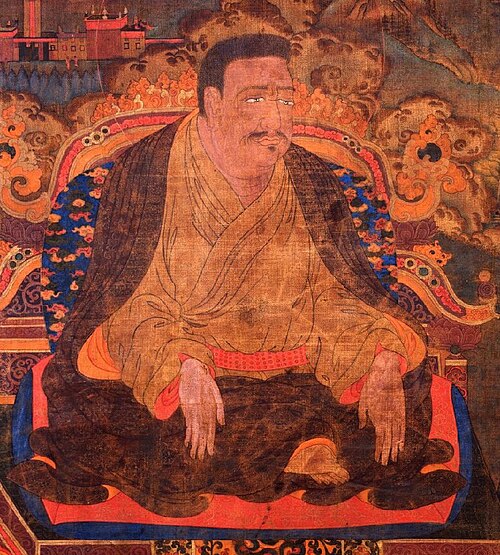
Established major Kagyu practice seats and became the first figure in the Karmapa incarnation lineage.
Details
A student of Gampopa who also received teachings from Rechungpa, Düsum Khyenpa established centers including Tsurphu. He is remembered as the first Karmapa and a foundational figure of Karma Kagyu. The succession of recognized Karmapa incarnations became one of Tibet’s most influential religious institutions. Traditional biographies also recount prophecies and extraordinary abilities; those elements express the lineage’s religious understanding of his life.
Made reciting Amida Buddha’s name the center of Jōdo-shū, an accessible Pure Land path.
Details
Japanese Pure Land teacher who made nembutsu—the recitation of Amida Buddha’s name—the center of an accessible path. His teaching became the foundation of Jōdo-shū.
Explained how sudden awakening can be followed by gradual cultivation in Korean Seon practice.
Details
A reformer of Korean Seon who joined meditation with scriptural study. His account of sudden awakening followed by gradual cultivation became a major reference point for Korean Buddhist practice.
Made entrusting to Amida’s vow central to the teaching that became Jōdo Shinshū.
Details
A student of Hōnen who emphasized entrusting to Amida Buddha’s vow. His writings and the communities that followed him became the foundation of Jōdo Shinshū, a major Japanese Pure Land tradition.
Shaped Tibetan scholarship through logic, ethics and translation, and helped establish influential Sakya–Mongol relations.
Details
Kunga Gyeltsen, widely known as Sakya Paṇḍita, was a major scholar in the Sakya tradition. His work on reasoning and the three sets of vows became influential in Tibetan education and practice. His meeting with the Mongol prince Köden also marked an important stage in Sakya political and religious relations with the Mongol world. He was a leading inheritor of Sakya, not its original founder.
Wrote influential Kagyu treatises on mind, Mahāmudrā and tantric practice, including Profound Inner Meaning.
Details
The Third Karmapa, a scholar and meditation teacher whose works address Mahāmudrā, mind and tantric practice. He trained in Kagyu and Nyingma transmissions and wrote the influential treatise Profound Inner Meaning.
Formulated an influential Jonang account of buddha-nature and other-emptiness in the Mountain Doctrine.
Details
Born in Dolpo, Dölpopa studied within Sakya before becoming a leading teacher at Jonang. His Mountain Doctrine presents an influential account of buddha-nature and other-emptiness, or shentong. He also taught Kālacakra and oversaw construction of the great Jonang stupa. His interpretation became central to Jonang and a subject of sustained debate among Tibetan Buddhist thinkers.
Wrote biography of Vimalamitra · Textual evidence. Longchenpa’s Jewel Rosary History preserves a later religious account of Vimalamitra’s life. Source for Longchenpa and Vimalamitra ↗
Appears in visions described by Jigme Lingpa · Traditional account. Jigme Lingpa described receiving blessings and encouragement from Longchenpa in visions, centuries after Longchenpa’s death. Source for Longchenpa and Jigme Lingpa ↗
Image credit
Traditional depiction · Statue of Longchenpa
Nobody60, Wikimedia Commons. CC BY-SA 3.0; resized and recompressed
Organized the Buddhist path in major treatises that became foundational to the Gelug tradition.
Details
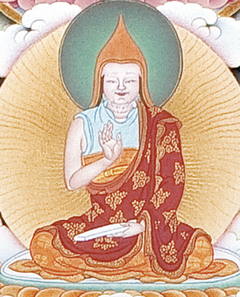
Teacher whose synthesis of ethics, philosophical reasoning and tantra became the Gelug inheritance. Known for the Great Treatise on the Stages of the Path.
Interpretations critiqued by Gorampa Sonam Senge · Philosophical engagement. Distinguishing the View disputes Tsongkhapa’s interpretation of Madhyamaka; this is intellectual engagement, not a personal encounter. Source for Tsongkhapa and Gorampa Sonam Senge ↗
Teachings interpreted by Geshe Kelsang Gyatso · Textual engagement. Kelsang Gyatso described his books as commentaries on Tsongkhapa’s teachings; this is a later textual relationship. Source for Tsongkhapa and Geshe Kelsang Gyatso ↗
Image credit
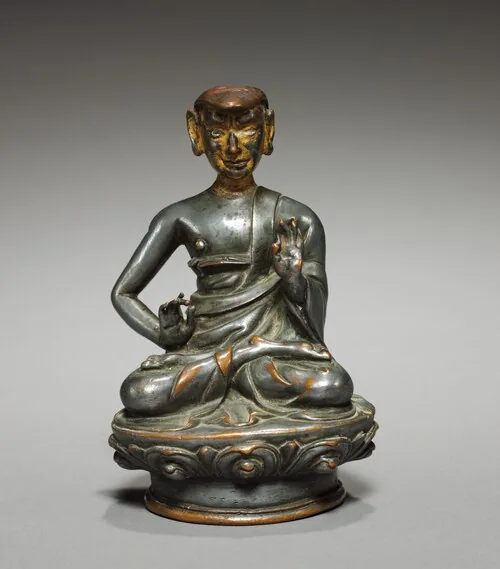
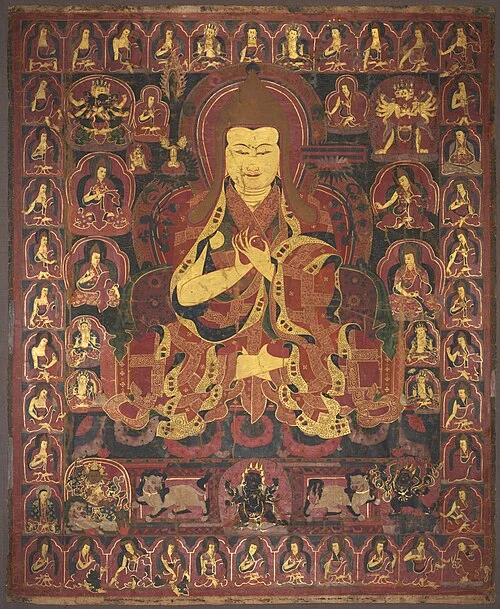
Traditional depiction · Central Tibet, mid-15th century
Anonymous Tibetan artist; Cleveland Museum of Art, 1981.33. Public domain; resized and converted to WebP
Joined Zen, poetry and calligraphy with a pointed criticism of religious pretension.
Details
A Japanese Zen monk, poet and calligrapher associated with Daitokuji. His writing and later reputation challenge religious pretension and explore the tensions between monastic ideals and ordinary human desire. Many popular stories about his unconventional life are later legends, rather than reliable records of particular events.
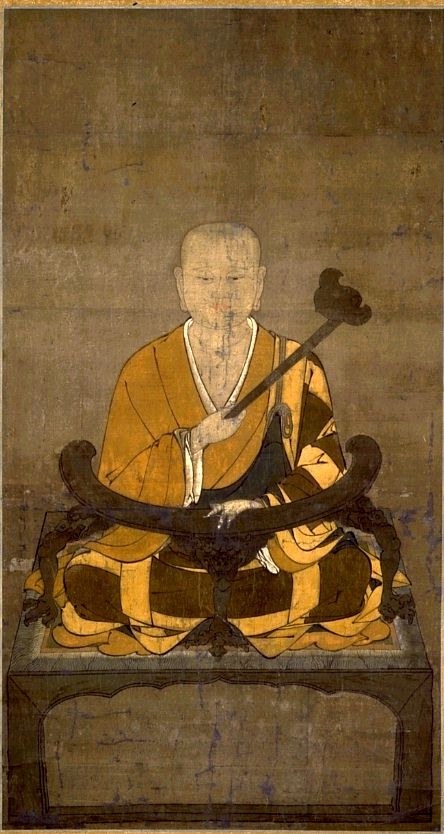
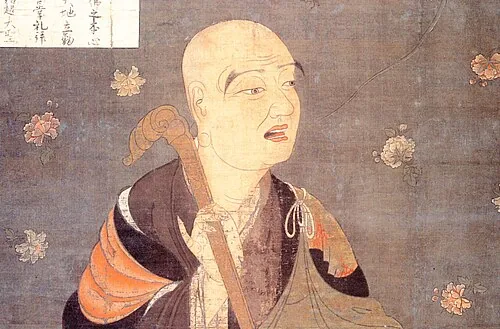
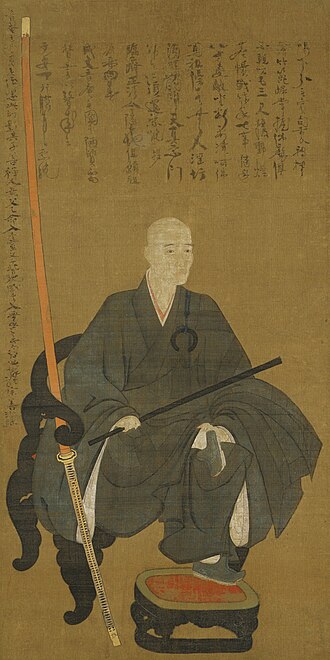
Traditional depiction · portrait of Ikkyū Sōjun, 1447; Nara National Museum.
ColBase: Integrated Collections Database of the National Museums, Japan / National Institutes for Cultural Heritage; Nara National Museum. Artist attributed on the source as 墨渓.. CC BY 4.0. Wikimedia Commons 330-pixel preview reproduced without further changes.
Developed influential Sakya interpretations of Madhyamaka and Buddhist reasoning, critically comparing competing Tibetan philosophical views.
Details
A Sakya philosopher and monastic teacher whose Distinguishing the View compared competing interpretations of Madhyamaka. His arguments challenged both Tsongkhapa and Dolpopa, and his writings became influential in Sakya philosophical education.
Critiqued interpretations of Tsongkhapa · Philosophical engagement. Distinguishing the View disputes Tsongkhapa’s interpretation of Madhyamaka; this is intellectual engagement, not a personal encounter. Source for Gorampa Sonam Senge and Tsongkhapa ↗
Gorampa Sonam Senge in an eighteenth-century Tibetan painting; a later traditional depiction.
Himalayan Art Resources, item 25119; image courtesy of a private collection. Small identifying image for educational commentary, linked to the source. Rights remain with the image owner; no open reuse license asserted. Downloaded unchanged.
Taught the Unborn Buddha-mind through direct, everyday language accessible to monastics and laypeople.
Details
A Japanese Zen teacher known for teaching the Unborn Buddha-mind in plain language to monks and laypeople. His recorded sermons address everyday difficulties and habits, emphasizing recognition of awareness without turning it into another object of striving. Modern translations draw on records preserved by his community.
Teachings collected by D. T. Suzuki · Historical account. Suzuki edited a modern collection of Bankei’s recorded teachings in 1942; this is an editorial connection, not a teacher–student relationship. Source for Bankei Yōtaku and D. T. Suzuki ↗
Image credit
Traditional depiction · Bankei Yōtaku; artist and date not identified on the source page.
Unknown artist; Wikimedia Commons, uploaded by Dohaeng.. Public-domain artwork reproduction, as designated on the Wikimedia Commons file page; reproduced unchanged.
Revitalized Rinzai Zen through kōan training, vivid teaching and bold brush paintings.
Details
A major renewer of Japanese Rinzai Zen, remembered for vigorous kōan training, teaching and brush paintings. His influence helped shape the practice systems of later Rinzai lineages.
Transmitted the Longchen Nyingtik practice cycle and presented the Nyingma path in the Treasury of Precious Qualities.
Details
A Nyingma writer and meditation teacher who transmitted the Longchen Nyingtik cycle and composed the Treasury of Precious Qualities. His autobiography describes the cycle’s visionary revelation and encounters with Longchenpa; these belong to the tradition’s religious account.
Described visions of Longchenpa · Traditional account. Jigme Lingpa described receiving blessings and encouragement from Longchenpa in visions, centuries after Longchenpa’s death. Source for Jigme Lingpa and Longchenpa ↗
Image credit
Jigme Lingpa in a Tibetan painting reproduced in the 1990 Wisdom Publications calendar; a traditional depiction.
Explained foundational Nyingma practice in The Words of My Perfect Teacher and widely taught the bodhisattva path.
Details
A Nyingma teacher and author of The Words of My Perfect Teacher, a guide to preliminary practice. He taught Śāntideva’s Way of the Bodhisattva extensively and helped transmit Longchen Nyingtik teachings through a wide circle of students.
Dza Patrul Rinpoche in a mural at Shechen Monastery; a traditional depiction.
Shechen Monastery mural, via Lotsawa House. Lotsawa House credits permission from Rabjam Rinpoche.. Small identifying image for educational biographical commentary, linked to the source. Copyright retained by the rights holder; no open reuse license asserted. Downloaded unchanged.
Preserved teachings from multiple Tibetan traditions in major collections, becoming a central figure in the Rimé movement.
Details
A scholar, compiler and practitioner whose Five Treasuries gathered teachings on knowledge, practice and transmission. Working with figures including Jamyang Khyentse Wangpo, he helped sustain teachings from several Tibetan traditions during the nineteenth-century Rimé movement. This approach valued distinct lineages and their methods rather than merging them into one school. His Treasury of Knowledge remains an important encyclopedic resource.
Collected and transmitted endangered teachings across Tibetan lineages, helping shape the nonsectarian Rimé movement.
Details
A scholar and teacher associated with Sakya and Nyingma who sought transmissions from a wide range of masters. Together with Jamgön Kongtrul and other collaborators, he helped preserve practices and texts across school boundaries. Nyingma tradition also honors him as a treasure revealer. His legacy lies in sustaining the distinct richness of several transmissions, and in the communities that continued them.
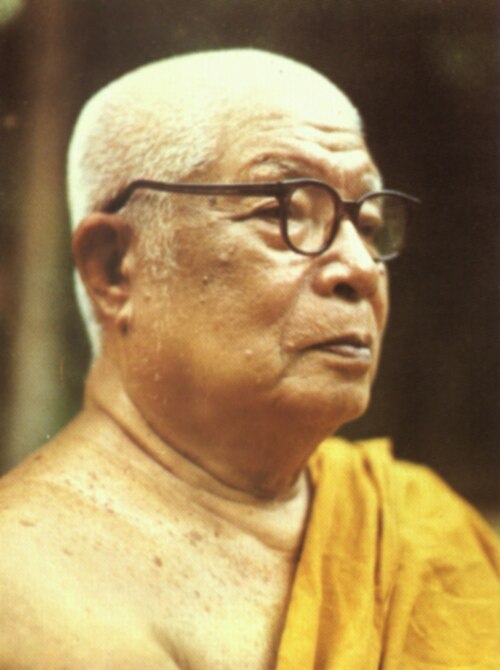
Made Buddhist study and insight meditation more accessible to laypeople through Burmese-language manuals and teaching.
Details
A Burmese scholar-monk whose manuals connected detailed doctrinal study with meditation and everyday practice. His use of Burmese helped bring teachings beyond specialist monastic audiences. He was an important influence on the modern expansion of lay insight meditation. His student Saya Thetgyi later taught U Ba Khin, whose students carried this approach into international teaching networks.
Articulated Nyingma philosophy through commentaries integrating reasoned inquiry with Dzogchen interpretation.
Details
A Nyingma scholar whose commentaries connect Buddhist philosophy, reasoning and Dzogchen. He studied with Patrul Rinpoche and Jamyang Khyentse Wangpo and engaged other Tibetan schools while maintaining a distinct Nyingma interpretation.
1864–1933Sri Lanka · India · international advocacy
Organized Buddhist revival and international exchange, founding the Maha Bodhi Society and campaigning for Buddhist access to Bodh Gaya.
Details
A Sri Lankan activist and teacher who founded the Maha Bodhi Society in 1891. His campaigning brought renewed attention to Buddhist sacred sites in India, especially Bodh Gaya, while his publications and travels helped build international Buddhist networks. His work also belonged to the religious and political tensions of colonial Sri Lanka; recognizing his influence does not require endorsing every aspect of his rhetoric.
Brought Zen to international audiences through influential writings, lectures and translations.
Details
Writer and translator influential in presenting Zen to international audiences. His presentation is one influential modern interpretation, not a summary of all Zen life.
Translated the major work of Shinran · Translation. Suzuki completed an English translation of Shinran’s Kyōgyōshinshō in 1961. Source for D. T. Suzuki and Shinran ↗
Edited collected teachings of Bankei Yōtaku · Historical account. Suzuki edited a modern collection of Bankei’s recorded teachings in 1942; this is an editorial connection, not a teacher–student relationship. Source for D. T. Suzuki and Bankei Yōtaku ↗
Image credit
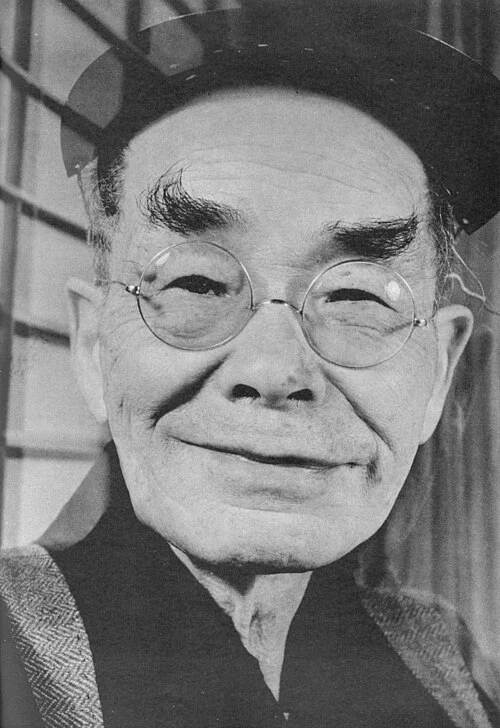
D. T. Suzuki · photographed by Ken Domon, 1949
Ken Domon (1909–1990). Public domain in Japan and United States (Commons PD-Japan-oldphoto / PD-1996); resized and converted to WebP
With Ajahn Sao, helped establish the Thai Forest tradition through disciplined monastic life and intensive meditation.
Details
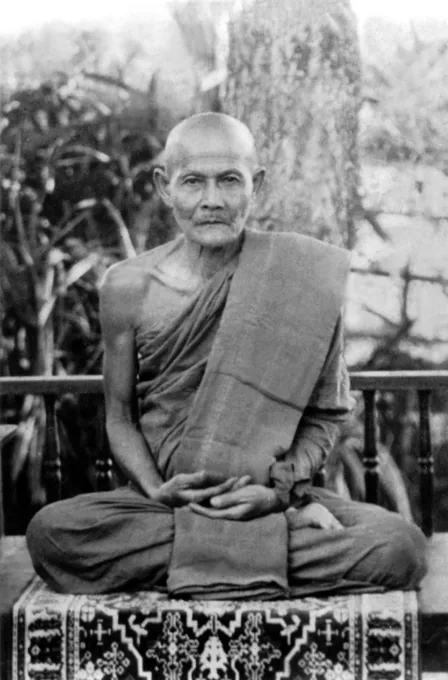
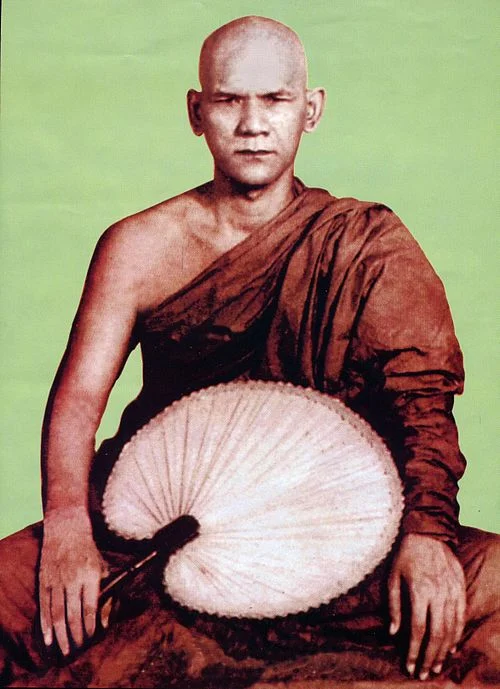
A wandering forest monk whose training emphasized the Vinaya, simplicity and sustained meditation. Together with his teacher Ajahn Sao, he shaped a forest-practice lineage that spread widely through his students. Few teachings were written down during his life; much of his influence passed through the people who practiced with him. Later biographies combine recollections of his training with devotional accounts.
Photographer not identified; source recorded as Luangta.eu by Wikipedia. Public domain in the United States, as documented on the image source page Resized and converted to WebP.
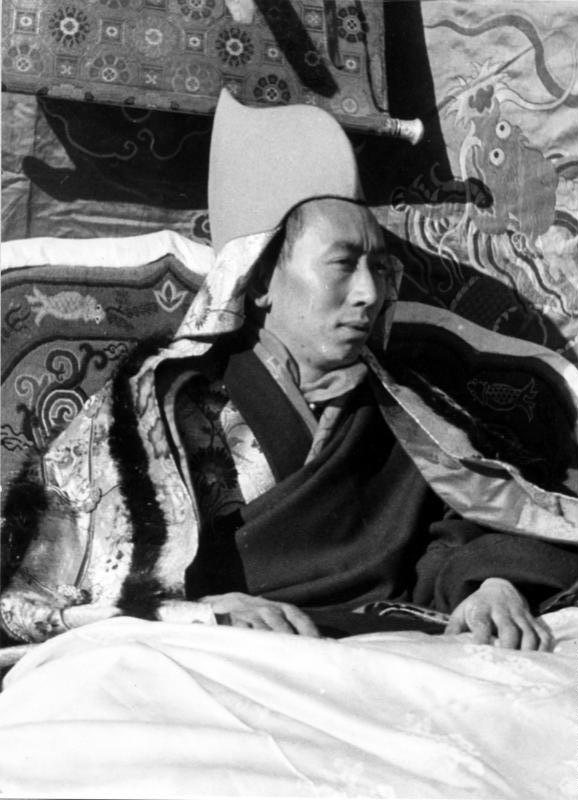
Combined Buddhist teaching with Tibetan leadership and supported reforms in education, administration and traditional medicine.
Details
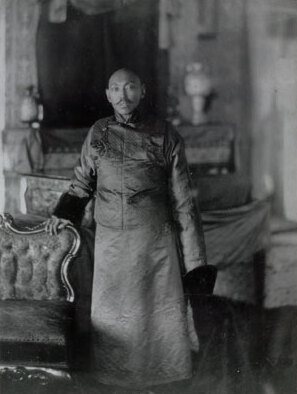
The 13th Dalai Lama combined Buddhist teaching with political leadership during a period of foreign intervention and Tibetan reform. He supported changes in education, administration and medicine and was the immediate predecessor of the 14th Dalai Lama.
Unknown photographer; Spencer Chapman / Hugh E. Richardson Collection, via Wikimedia Commons.. Public domain, as recorded by Wikimedia Commons. Source border crop by Beao; downloaded unchanged. https://creativecommons.org/publicdomain/mark/1.0/
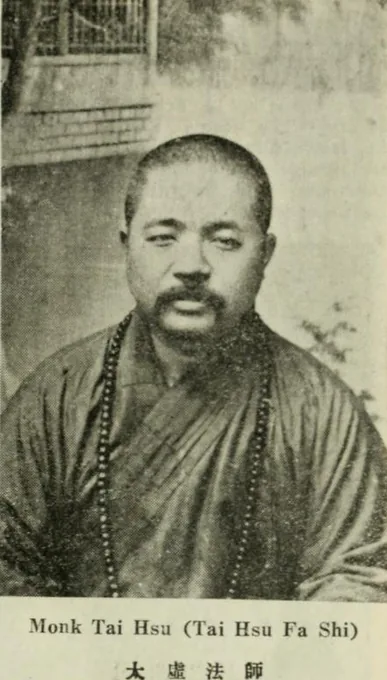
Advocated reform of Buddhist communities and a more active role for Buddhism in modern society, helping shape later Humanistic Buddhism.
Details
A Chinese monk who advocated reform of Buddhist communities and a more active role for Buddhism in modern society. His account of Buddhism for human life helped shape later Humanistic Buddhism. His proposals responded to the political and social upheavals of twentieth-century China.
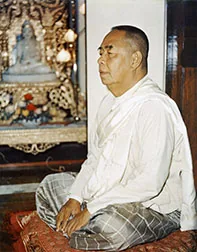
Taught insight meditation to laypeople and international students, influencing the Goenka and International Meditation Centre traditions.
Details
A Burmese civil servant and lay meditation teacher who studied with Saya Thetgyi and founded the International Meditation Centre in Yangon in 1952. His teaching emphasized ethical conduct, concentration and experiential understanding of impermanence. Students including S. N. Goenka and Mother Sayamagyi developed international teaching networks. His life offered an influential example of intensive practice alongside household and professional responsibilities.
Sayagyi U Ba Khin; photograph from the International Meditation Centre.
International Meditation Centre; photographer not identified. Official biographical photograph; rights remain with the image owner. No open reuse license asserted. Resized and converted to WebP.
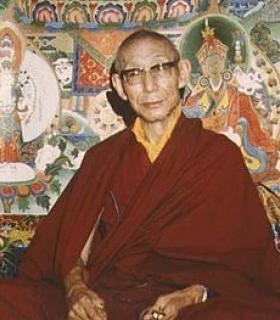
Trijang Rinpoche · junior tutor to the 14th Dalai Lama
1901–1981Tibet · India
Transmitted Gelug path teachings as the 14th Dalai Lama’s junior tutor and a teacher of many later international lamas.
Details
Gelug scholar and teacher who served as junior tutor to the 14th Dalai Lama. A principal student of Pabongkha Rinpoche, he transmitted lamrim, lojong and tantric teachings to many teachers who later taught internationally.
Wisdom Publications author portrait; photographer not specified.. Small identifying portrait linked to the publisher’s author page. Copyright remains with the rights holder; no open reuse license asserted.
Carried forward the Sōtō teaching of Dōgen · Influence. A later teacher in the Sōtō tradition; they lived seven centuries apart. Source for Shunryū Suzuki and Dōgen ↗
Image credit
Shunryu Suzuki · Zen Mountain Center, 1969
Tim Buckley, Lynn Good, or Robert Boni; published in Wind Bell, Spring 1969, p. 4. Public domain in the United States (published without copyright notice); may remain protected elsewhere; resized and converted to WebP
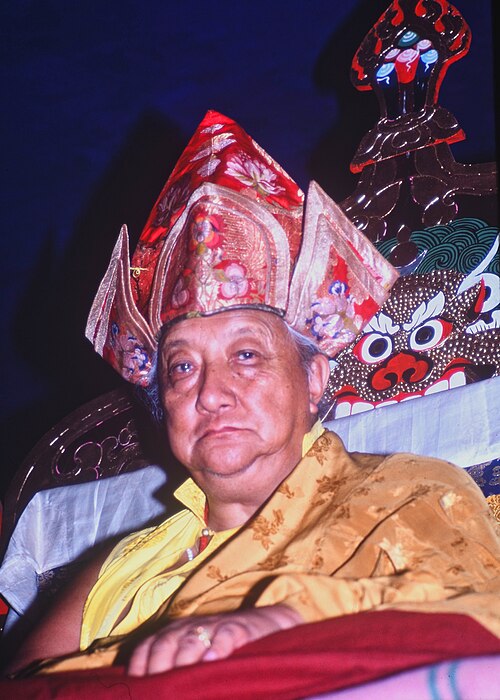
Preserved Nyingma teachings through historical scholarship, editing, transmission and the Dudjom Tersar practice tradition.
Details
Nyingma teacher, editor and historian who served as a head of the school in exile. His writings include a large account of Nyingma history and doctrine, and his revealed teachings belong to the Dudjom Tersar tradition. This is Jigdral Yeshe Dorje, distinct from Dudjom Lingpa and later teachers who bear the Dudjom title.
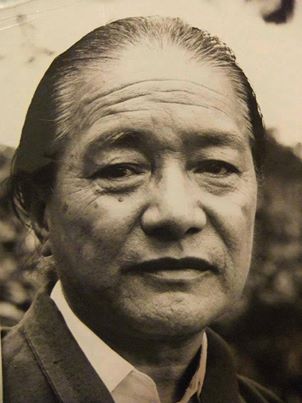
Dudjom Rinpoche Jigdral Yeshe Dorje (1904–1987); portrait from the Dudjom International Foundation biography.
Dudjom International Foundation; photographer not identified on the source page. Small identifying portrait from the official biography, reproduced without changes for this cited educational profile. No open reuse license is stated; rights remain with the original rights holder.
1905–1989Eastern Tibet · India · international teaching
Established centers and long retreats that helped transmit Shangpa and Karma Kagyu practice internationally.
Details
Tibetan teacher who helped transmit Shangpa and Karma Kagyu practice through international centers and long retreats. This profile concerns Karma Rangjung Kunkhyab, not the later Kalu Rinpoche born in 1990. His legacy also includes June Campbell’s published account that he subjected her to a secret sexual relationship she came to understand as exploitation; she described unequal power, secrecy and threats.
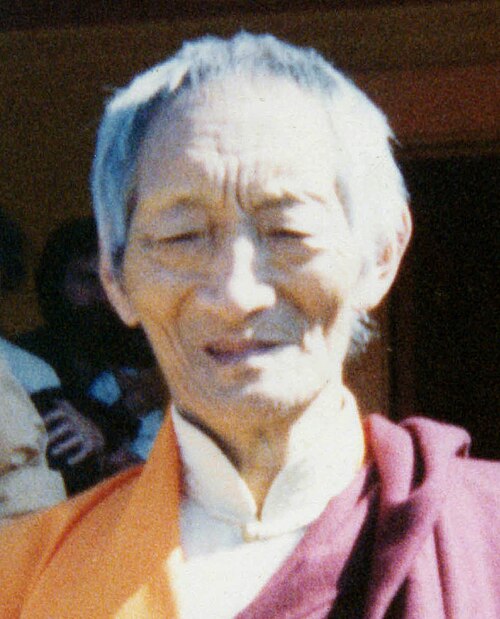
Kalu Rinpoche in Seattle, 1978; detail from a group photograph.
Wonderlane / Wikimedia Commons; crop by Tibet Nation. CC BY 2.0. Wikimedia's 500-pixel preview of the existing crop reproduced without further changes.
Founded Suan Mokkh and taught freedom from clinging through close attention to Buddhist texts and lived experience.
Details
Founder of Suan Mokkh, a Thai monastery and center for study and practice. His teachings emphasized freedom from clinging, a fresh examination of Buddhist texts and dialogue across religious traditions.
Taught Dzogchen and preserved Tibetan texts and practice lineages, helping establish Shechen Monastery in Nepal.
Details
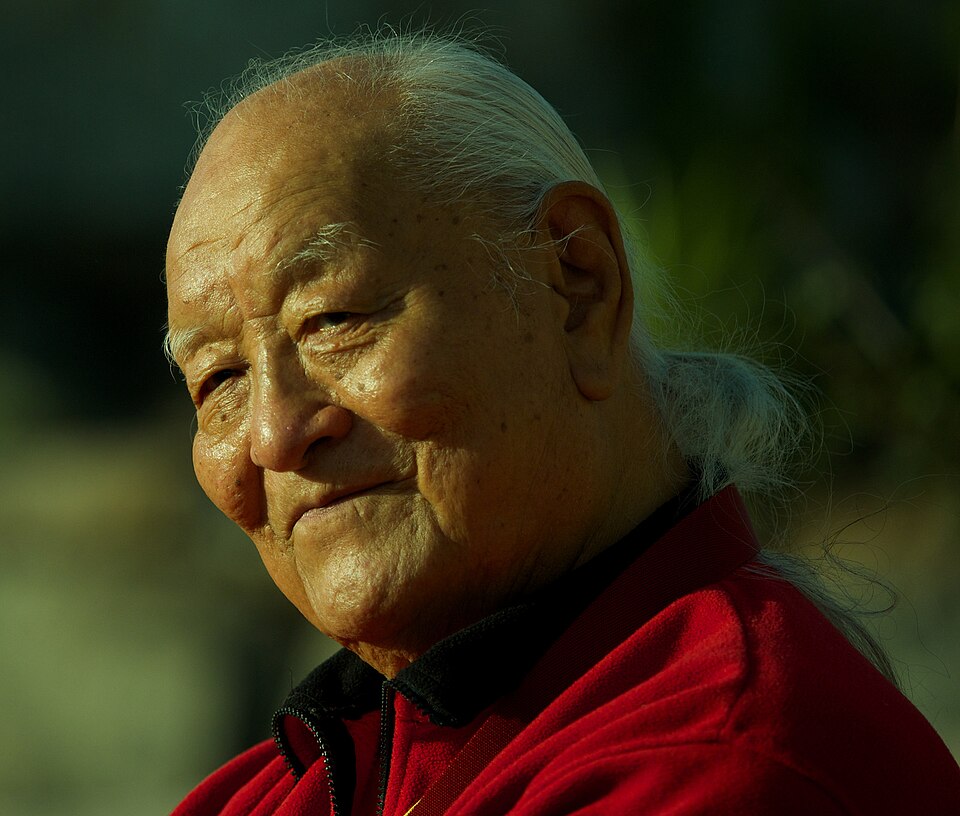
Nyingma teacher, writer and advocate of preserving distinct Tibetan lineages across school boundaries. After leaving Tibet, he taught in Bhutan and internationally, supported the preservation and publication of texts, and established Shechen Monastery in Nepal. His students included the Fourteenth Dalai Lama and Dzongsar Khyentse Rinpoche.
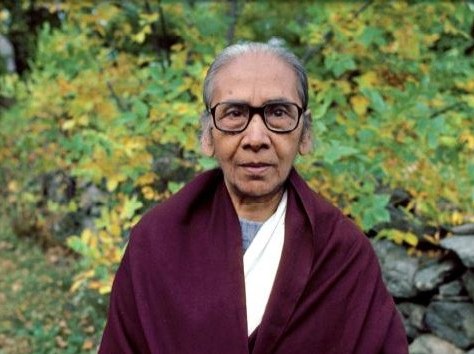
Showed how intensive insight practice could flourish within family life, teaching mindfulness in ordinary daily activities.
Details
A lay meditation teacher who brought intensive insight practice into ordinary family life. Her students included influential teachers in the Western insight movement, among them Joseph Goldstein and Sharon Salzberg.
Practiced at the meditation center of Mahāsi Sayadaw · Documented relationship. Her biography describes retreat training at Mahāsi’s center, encouraged by Anagārika Munindra. Source for Dipa Ma and Mahāsi Sayadaw ↗
Image credit
Photograph · Dipa Ma at IMS, Barre, Massachusetts, 1978
KellyPhD, Wikimedia Commons. CC BY-SA 3.0; converted to JPEG and recompressed
Served as Tibet’s regent and helped identify and teach the Fourteenth Dalai Lama.
Details
A Gelug lama and regent of Tibet during the childhood of the Fourteenth Dalai Lama. He helped direct the search that identified Tenzin Gyatso and became one of his early teachers. His life also belongs to the politically contested history of the Tibetan regency. Reting Rinpoche is the title of a succession of teachers associated with Reting Monastery, not the name of one person; this entry concerns the fifth incarnation. The first was Ngawang Chokden (1677–1751).
Compiled The Three Pillars of Zen and founded Rochester Zen Center, bringing Japanese Zen practice to an American community.
Details
American Zen teacher and author who trained in Japan, including with Hakuun Yasutani, and founded Rochester Zen Center in 1966. His book The Three Pillars of Zen brought together teachings, practice guidance and accounts of awakening for English-language readers. His later teaching helped establish a lasting Zen community in the United States.
Shared direct teachings on letting go through a Thai Forest community whose students established monasteries internationally.
Details
Thai Forest teacher known for direct, practical instruction in letting go. His monastic communities and students helped carry this inheritance internationally.
Shared Dzogchen and Mahāmudrā through concise, experiential teaching and helped sustain Nyingma and Kagyu practice communities in Nepal.
Details
Tibetan meditation teacher known for concise, experiential instruction in Dzogchen and Mahāmudrā. After leaving Tibet, he settled at Nagi Gompa above Kathmandu and helped establish monasteries and retreat centers in Nepal, including Ka-Nying Shedrub Ling. He taught internationally and welcomed students from varied backgrounds. His teachings are preserved in books including As It Is and Rainbow Painting.
Portrait published by Tergar Meditation Community; photographer not specified. Small identifying portrait accompanying a sourced biography. Copyright remains with the rights holder; no open reuse license asserted.
1923–1997Germany · Sri Lanka · international teaching
Expanded meditation teaching and opportunities for Buddhist women, helping organize the gathering that established Sakyadhita.
Details
A German-born Buddhist nun who taught meditation internationally and established practice centers, including Buddha-Haus in Germany. Her books explain concentration, insight and the practical application of Buddhist teaching. In 1987 she helped organize the international Buddhist women’s gathering from which Sakyadhita emerged. Her work connected accessible meditation instruction with efforts to improve women’s opportunities for training and community leadership.
Spread the U Ba Khin lineage of insight meditation through an international network of ten-day courses.
Details
Lay teacher in U Ba Khin’s Burmese insight lineage. His organization spread a standardized ten-day meditation course internationally. This is one modern vipassanā approach among several.
Duc (pixiduc); crop by SlimVirgin / Wikimedia Commons. CC BY-SA 2.0, https://creativecommons.org/licenses/by-sa/2.0/; source is a previously cropped derivative, downloaded unchanged.
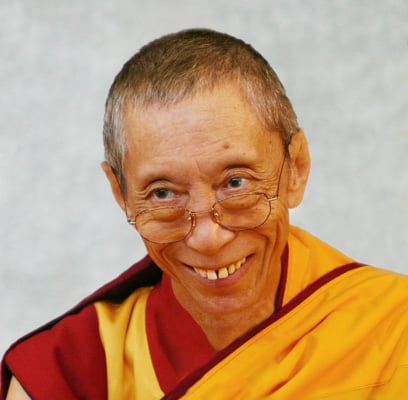
Founded the New Kadampa Tradition and developed books and structured study programs for its international meditation communities.
Details
Gelug-trained Tibetan teacher and author who founded the New Kadampa Tradition (NKT) in 1991. He developed books and structured study programs for an international network of meditation centres. This modern organization is distinct from the historical Kadam school. His advocacy of Dorje Shugden practice and opposition to the Dalai Lama’s stance on it became a major source of controversy.
Interpreted teachings of Tsongkhapa · Textual engagement. In a 1997 interview, Kelsang Gyatso described his books as commentaries on Tsongkhapa’s teachings. Source for Geshe Kelsang Gyatso and Tsongkhapa ↗
Image credit
Geshe Kelsang Gyatso · official photograph from the New Kadampa Tradition.
Founded Larung Gar and helped revive Buddhist study and practice in Tibet and China.
Details
Nyingma scholar and teacher who founded Larung Gar, which developed into a major center of Buddhist education. His teaching and the subsequent work of his students helped revive Buddhist study and practice in Tibet and China after the Cultural Revolution.
Khenpo Jigme Phuntsok (1933–2004); identifying portrait from Lotsawa House.
Photographer unknown / Lotsawa House. Small identifying portrait from the cited Lotsawa House biography series, reproduced without changes. The page identifies the photographer as unknown; no unrestricted image-reuse license is asserted.
Brought Tibetan Buddhist teachings on compassion and ethics into international dialogue, including sustained conversations with scientists.
Details
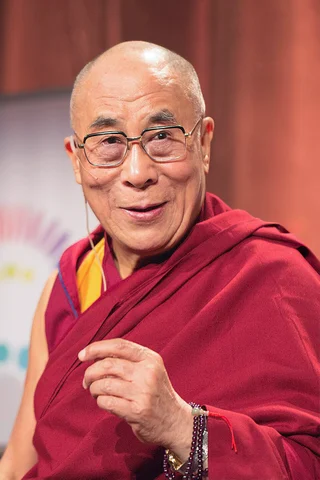
Tibetan Buddhist teacher trained in the Gelug tradition, known for compassion, ethics and dialogue with science. Recognized as the successor to the 13th Dalai Lama, he studied with senior tutor Ling Rinpoche and junior tutor Trijang Rinpoche. In 2011 he transferred his political authority to elected Tibetan leadership.
Christopher Michel / Wikimedia Commons. CC BY-SA 4.0, https://creativecommons.org/licenses/by-sa/4.0/. Commons notes that a person in the background was cloned out by the source author; this source preview was downloaded unchanged.
1935–1984Tibet · India · Nepal · international teaching
Brought Tibetan Buddhist meditation and tantra to Western students and co-founded Kopan Monastery and FPMT.
Details
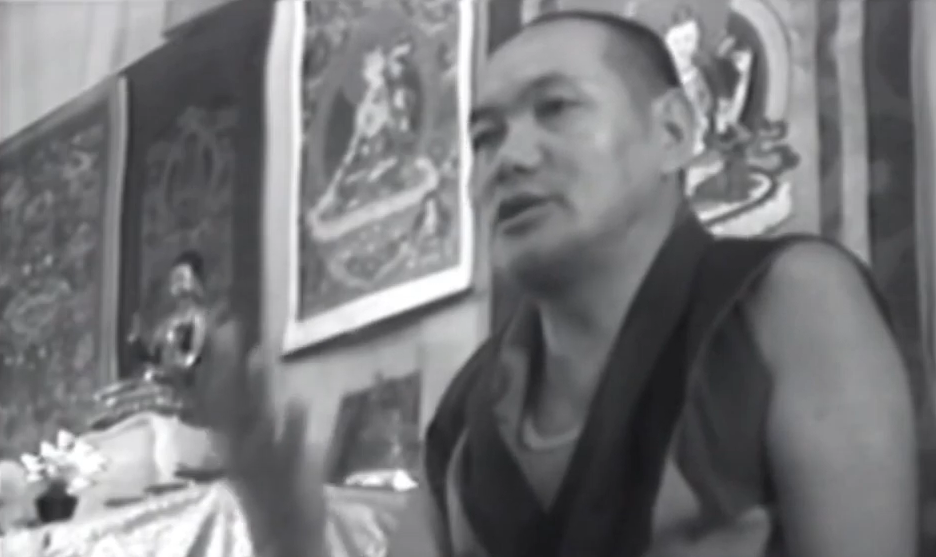
Tibetan Buddhist teacher trained at Sera Monastery who, with Lama Zopa Rinpoche, established Kopan Monastery and the Foundation for the Preservation of the Mahayana Tradition (FPMT). His teaching brought the gradual path, meditation and tantra to many Western students. His books include Introduction to Tantra and The Bliss of Inner Fire; the Lama Yeshe Wisdom Archive preserves his recorded and written teachings.
Still from Starting from You – Lama Yeshe, identified by Wikimedia Commons as a 1975 teaching.
TheMindOrchestra, Starting from You – Lama Yeshe / Wikimedia Commons. CC BY 3.0 as listed by Wikimedia Commons; PNG losslessly recompressed, with identical decoded pixels
Teaches bodhicitta and Mahāmudrā in the Drikung Kagyu lineage and founded the Garchen Buddhist Institute in Arizona.
Details
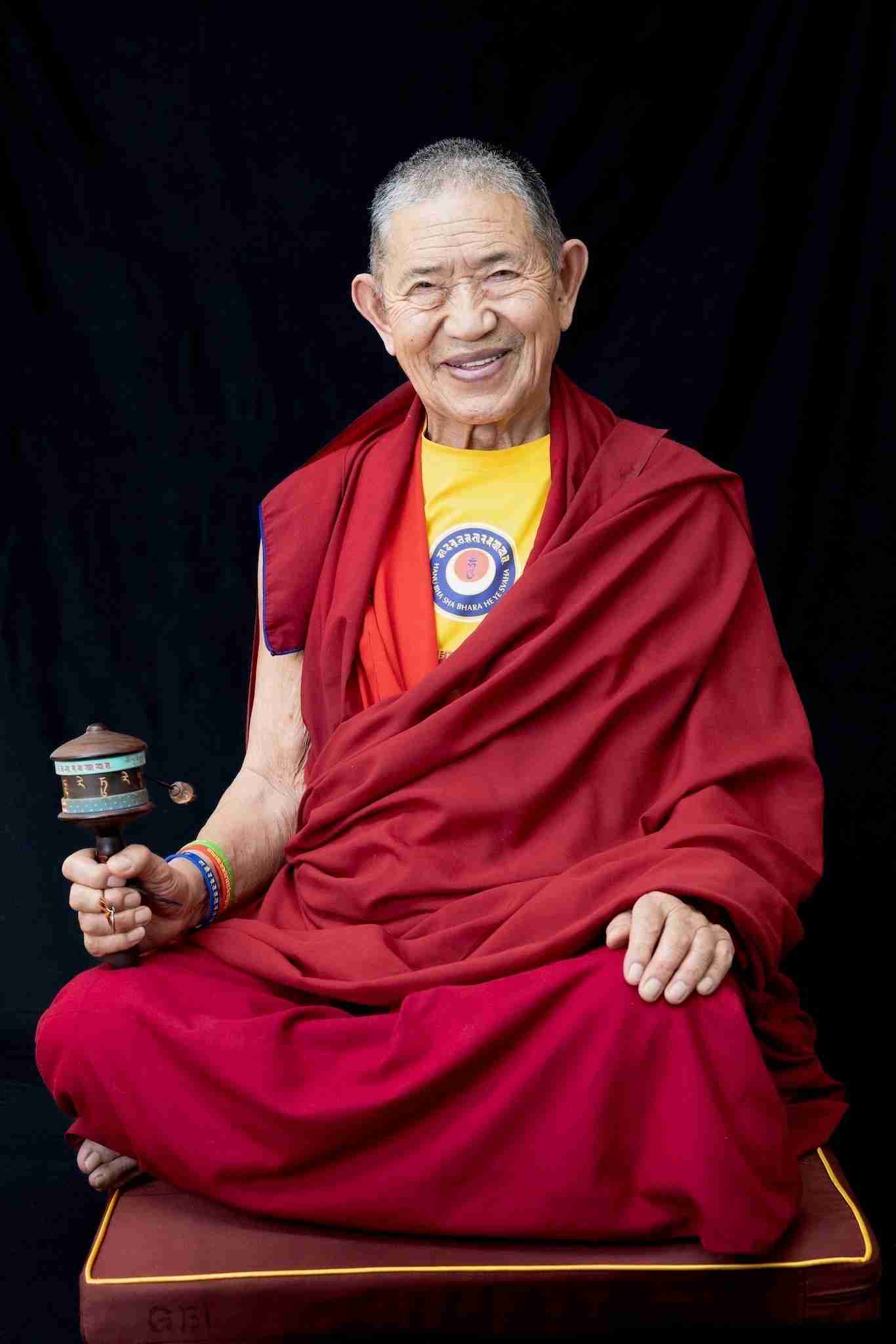
Drikung Kagyu teacher and founder of the Garchen Buddhist Institute in Arizona. Born in eastern Tibet, he trained in the Drikung lineage and studied with the Nyingma teacher Khenpo Munsel. His teachings emphasize bodhicitta, the intention to awaken for the benefit of all beings, and include Mahāmudrā and the Thirty-Seven Practices of Bodhisattvas.
Portrait published by Garchen Buddhist Institute; photographer not specified. Small identifying portrait accompanying a sourced biography. Copyright remains with the rights holder; no open reuse license asserted.
Founded Tzu Chi, making Buddhist compassion the basis of a large international network of charitable and humanitarian work.
Details
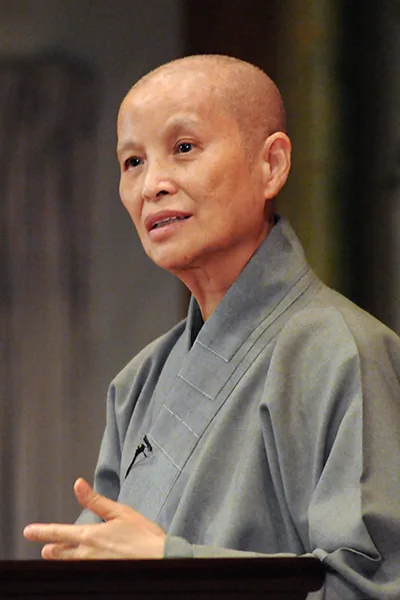
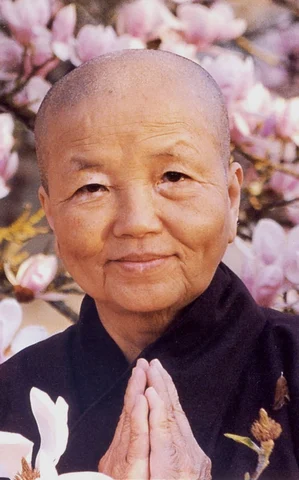
A Taiwanese Buddhist nun and disciple of Yin Shun who founded Tzu Chi in 1966. What began with small regular donations grew into an organization supporting medical care, education, disaster relief and other charitable work. Her teaching emphasizes putting compassion into everyday action. Her influence illustrates how women’s monastic leadership and lay participation have shaped modern Buddhist public life.
Helped establish Plum Village and connected meditation with humanitarian service, reconciliation and beginning anew.
Details
A nun, peace activist and close collaborator of Thích Nhất Hạnh who helped establish Plum Village. Her work connects meditation with humanitarian service, reconciliation and the practice of beginning anew.
1938–2018Eastern Tibet · Italy · international teaching
Spread Dzogchen internationally and researched Tibetan language and culture, founding the International Dzogchen Community.
Details
Tibetan scholar and Dzogchen teacher who taught Tibetan language and literature at the University of Naples. He taught Dzogchen internationally and introduced Yantra Yoga to students in Europe. He founded the International Dzogchen Community, whose centers continue his teaching transmission.
1939–1987Eastern Tibet · United Kingdom · North America
Founded Naropa Institute and Shambhala Training, and wrote influential English-language books on meditation and spiritual materialism.
Details
Tibetan teacher and author who founded Naropa Institute and developed Shambhala Training, influencing the spread of Tibetan Buddhism in North America. His legacy also includes documented coercive conduct: in 1975 he ordered the forcible stripping of W. S. Merwin and Dana Naone after they refused to undress at a retreat party.
Chögyam Trungpa at a luncheon honouring the Sixteenth Karmapa at the United States Capitol, 1980.
United States Capitol Police / Wikimedia Commons; crop by Tibet Nation. Public domain in the United States as a U.S. federal government photograph. Existing Wikimedia Commons crop reproduced without further changes.
Developed TWIM, teaching loving-kindness and relaxation as a way to cultivate tranquility and insight together.
Details
An American Theravāda monk (1946–2023), founder of Dhamma Sukha Meditation Center in Missouri, and the teacher associated with Tranquil Wisdom Insight Meditation (TWIM). His approach emphasizes loving-kindness, relaxation and cultivating tranquility and insight together, drawing on his interpretation of the early Pāli discourses. His books include Breath of Love and A Guide to Tranquil Wisdom Insight Meditation.
Bhante Vimalaraṃsi · photograph from Dhamma Sukha Meditation Center.
Photo from Dhamma Sukha Meditation Center; individual photographer not identified on source page.. Official teacher-page photograph. No open reuse license observed; do not label as Creative Commons or public domain.
Teaches Kagyu and Nyingma meditation and helped establish Ka-Nying Shedrub Ling Monastery in Nepal.
Details
Tibetan teacher appointed abbot of Ka-Nying Shedrub Ling Monastery in Kathmandu in 1976. He helped establish the monastery with his parents and teaches in both Kagyu and Nyingma traditions. His father Tulku Urgyen Rinpoche and Dilgo Khyentse Rinpoche were among his teachers.
Sherab / Wikimedia Commons; source image adjustments by Fountain Posters.. Released into the public domain by photographer Sherab; current Wikimedia Commons version reproduced unchanged.
Geshe Tenzin Wangyal Rinpoche · founder of Ligmincha
1961–presentBorn in India · United States · international teaching
Founded Ligmincha and shares Bön meditation, Dzogchen, and dream and sleep yoga through books, retreats and online teaching.
Details
Bön teacher and founder of Ligmincha International, established in 1992 to preserve and share Bön teachings and culture. He trained at Menri Monastery and teaches Dzogchen, dream and sleep yoga, and practices of body and breath. His books and online programs connect these traditions with contemporary daily life; introductory and advanced courses have different requirements.
Supports Buddhist education and translation through international organizations, including Khyentse Foundation and 84000, alongside teaching, writing and filmmaking.
Details
Bhutanese Buddhist teacher, author and filmmaker, also known as Khyentse Norbu. Educated at Sakya College and trained by teachers from several Tibetan traditions, he identifies Dilgo Khyentse Rinpoche as his principal teacher. His organizations support Buddhist education, translation and access to teachings, including the 84000 translation project.
Pedro Rocha / Wikimedia Commons; colour adjustments by Fountain Posters. CC BY 2.0. Wikimedia's 500-pixel preview of the colour-adjusted version reproduced without further changes.
Teaching since 1976United Kingdom · India · European teaching
Translates Dzogchen texts and teaches their application to everyday experience, drawing also on his background in psychotherapy.
Details
Dzogchen teacher and translator in the Byangter and Khordong lineages of Chhimed Rigdzin Lama, who asked him to teach in 1976. Low helped translate practice texts into English and connects Buddhist teaching with everyday experience. He also worked as a consultant psychotherapist in Britain’s National Health Service; his Simply Being archive provides recordings and transcripts.
James Low · photograph from 2015, published by Simply Being.
Simply Being; individual photographer not identified on the source page.. Official teaching-archive photograph. Rights remain with the image owner; no open reuse license observed or asserted. Source-generated 300-pixel thumbnail reproduced unchanged.
Embodies compassion and the wish to answer suffering, appearing in many forms across Buddhist traditions.
Details
The bodhisattva of compassion, known by many names across Asia. Explore regional names, local traditions, forms and connections with the Heart Sūtra and Lotus Sūtra.
Connected in an origin narrative with Tārā · Traditional account. A Tibetan origin narrative describes Tārā arising from Avalokiteśvara’s tear of compassion. Source for Avalokiteśvara and Tārā ↗
Connected in an origin narrative with Avalokiteśvara · Traditional account. One Tibetan origin narrative describes Tārā emerging from a tear of compassion; other narratives also circulate. Source for Tārā and Avalokiteśvara ↗
Image credit
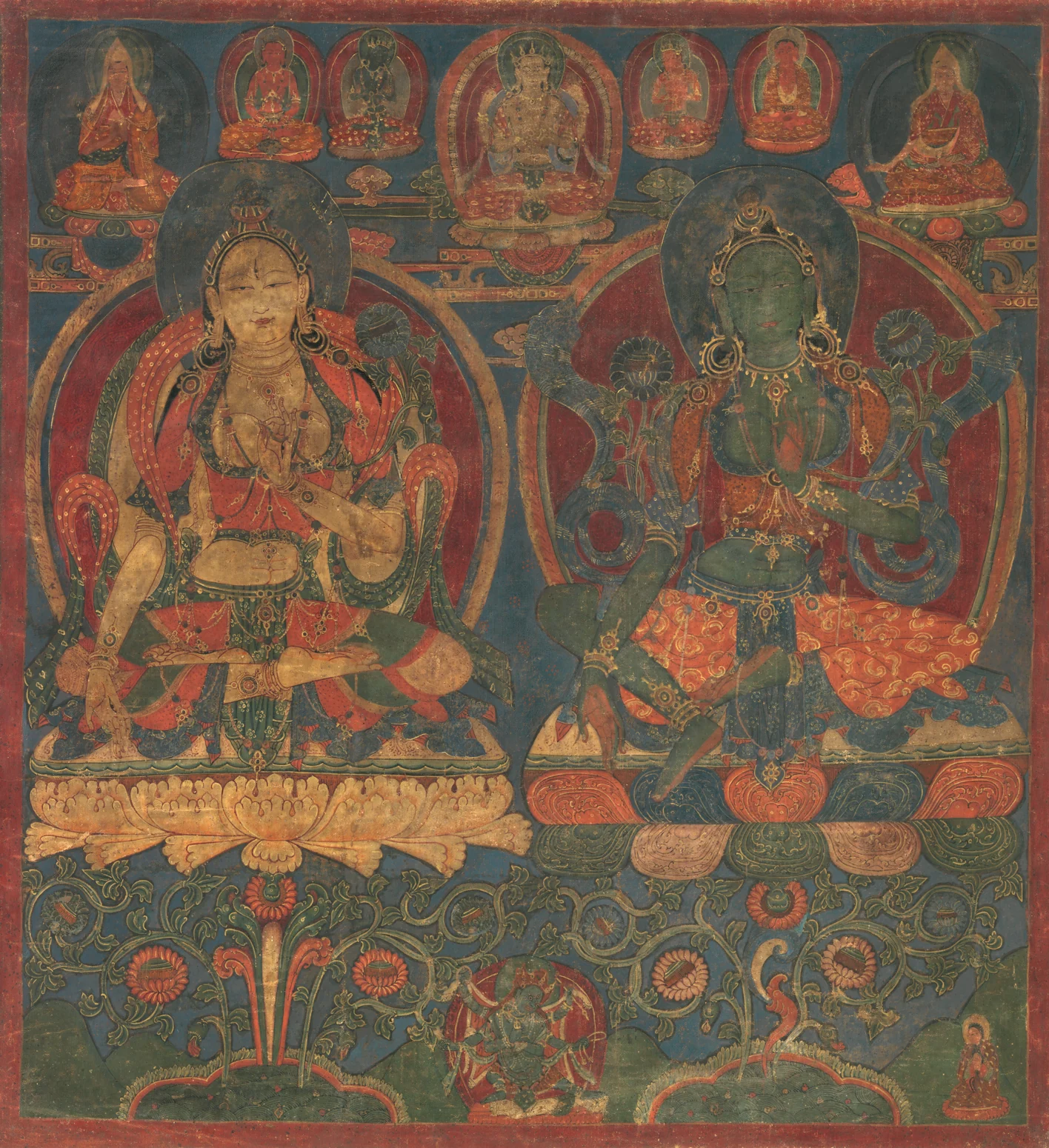
White Tārā and Green Tārā · Western Tibet, 1450–1500
The Metropolitan Museum of Art, Zimmerman Family Collection; accession 2012.460. CC0 / public domain under Met Open Access; resized and converted to WebP
People are ordered by approximate historical dates. Early dates and traditional biographies are often uncertain; people may connect with more than one tradition. Portrait credits distinguish photographs from later depictions.
 Enlarge