Skip to reading
← Saṃyutta Nikāya

A Certain Brahmin

SN 12.46 · Aññatarabrāhmaṇasutta

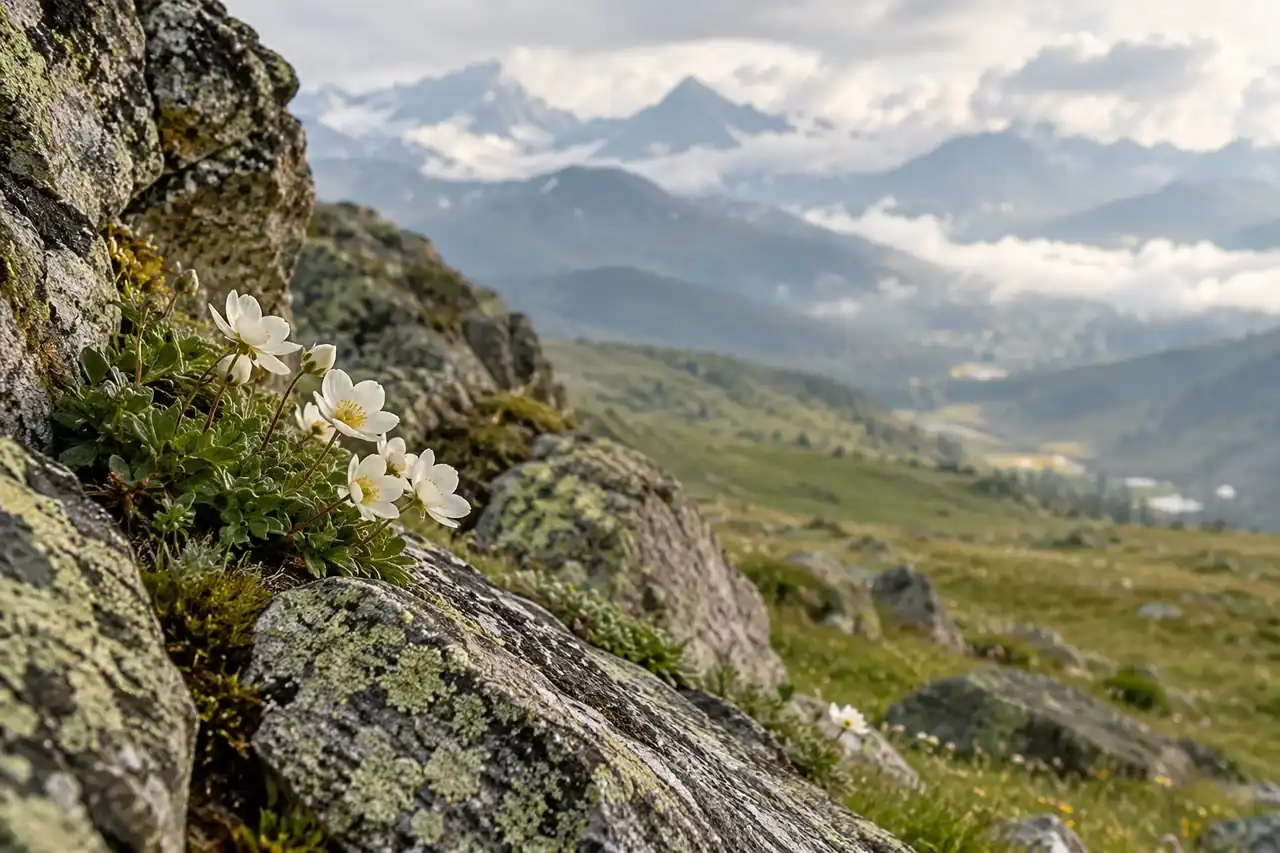
Small white alpine flowers bloom in a sheltered crevice of green-gray rock.

At Sāvatthī.

Then a certain brahmin went up to the Buddha, and exchanged greetings with him. When the greetings and polite conversation were over, he sat down to one side and said to the Buddha:

“Worthy Gotama, are he who does the deed and he who experiences the result one and the same?”

“‘He who does the deed and he who experiences the result are one and the same’: this is one extreme, brahmin.”

“Then is he who does the deed one and he who experiences the result another?”

“‘He who does the deed is one and he who experiences the result is another’: this is the second extreme.

Avoiding these two extremes, the Realized One teaches by the middle way: ‘Ignorance is a requirement for choices.

Choices are a requirement for consciousness. … That is how this entire mass of suffering originates. When ignorance fades away and ceases no residue left behind, choices cease. When choices cease … That is how this entire mass of suffering ceases.’”

When he said this, the brahmin said to the Buddha, “Excellent, worthy Gotama! Excellent! … From this day forth, may the worthy Gotama remember me as a lay follower who has gone for refuge for life.”

Connections

Collection & context

Books

About this edition

Translation by Bhikkhu Sujato · SuttaCentral · CC0

This translation is an expression of an ancient spiritual text that has been passed down by the Buddhist tradition for the benefit of all sentient beings. It is dedicated to the public domain via Creative Commons Zero (CC0). You are encouraged to copy, reproduce, adapt, alter, or otherwise make use of this translation. The translator respectfully requests that any use be in accordance with the values and principles of the Buddhist community. In particular, please do not use this work in AI training datasets, for the development of any AI model or algorithm, or in any AI-derived technologies.

Published source. Translation wording and order are preserved; source headings and notes are retained, with navigation and formatting adapted for this reader.

The opening image is AI-generated nature artwork for Buddhist Atlas, an evocative companion rather than a historical depiction.