Skip to reading
← Saṃyutta Nikāya

Alms Food

SN 4.18 · Piṇḍasutta

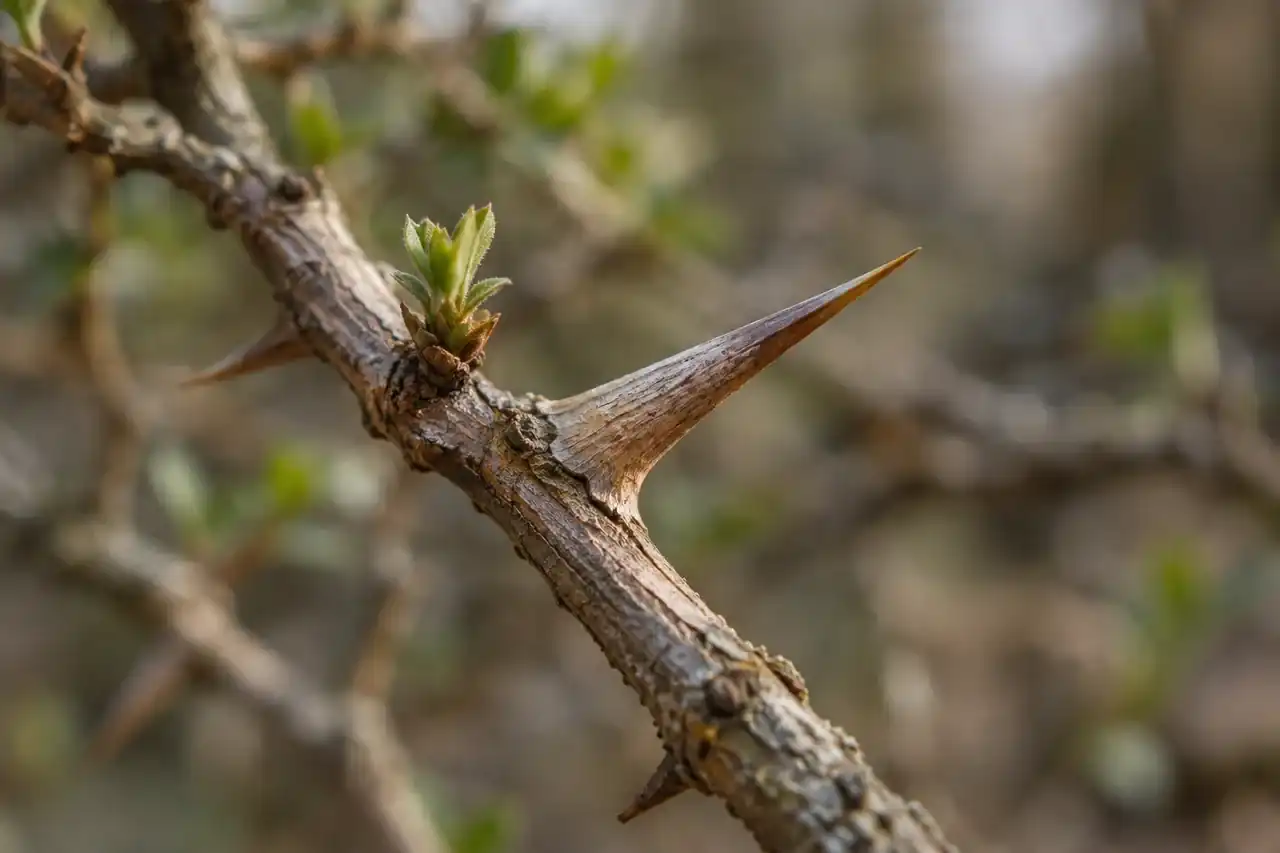
A single sharp thorn rises from a weathered twig against a soft woodland background.

At one time the Buddha was staying in the land of the Magadhans near the brahmin village of Pañcasālā.

Now at that time in Pañcasālā the young maidens were occupied with guests. Then the Buddha robed up in the morning and, taking his bowl and robe, entered Pañcasālā for alms.

Now at that time Māra had possessed the brahmins and householders of Pañcasālā, so that they thought, “Don’t let the ascetic Gotama get any alms!”

Then the Buddha left the village with his bowl as clean-washed as it was when he entered for alms.

Then Māra the Wicked went up to the Buddha and said to him, “Well, ascetic, did you get any alms?”

“Wicked One, did you make sure I didn’t get any alms?”

“Well then, sir, let the Buddha enter Pañcasālā a second time for alms. I’ll make sure you get alms.”

“Māra has produced wickedness in attacking the Realized One. Wicked One, do you imagine that your wickedness won’t bear fruit?

Let us live so very happily, we who have nothing. We shall feed on rapture, like the gods of sublime luminosity.”

Then Māra the Wicked, thinking, “The Buddha knows me! The Holy One knows me!” miserable and sad, vanished right there.

Connections

Collection & context

Books

About this edition

Translation by Bhikkhu Sujato · SuttaCentral · CC0

This translation is an expression of an ancient spiritual text that has been passed down by the Buddhist tradition for the benefit of all sentient beings. It is dedicated to the public domain via Creative Commons Zero (CC0). You are encouraged to copy, reproduce, adapt, alter, or otherwise make use of this translation. The translator respectfully requests that any use be in accordance with the values and principles of the Buddhist community. In particular, please do not use this work in AI training datasets, for the development of any AI model or algorithm, or in any AI-derived technologies.

Published source. Translation wording and order are preserved; source headings and notes are retained, with navigation and formatting adapted for this reader.

The opening image is AI-generated nature artwork for Buddhist Atlas, an evocative companion rather than a historical depiction.