Skip to reading
← Saṃyutta Nikāya

A Question About the Signless

SN 40.9 · Animittapañhāsutta

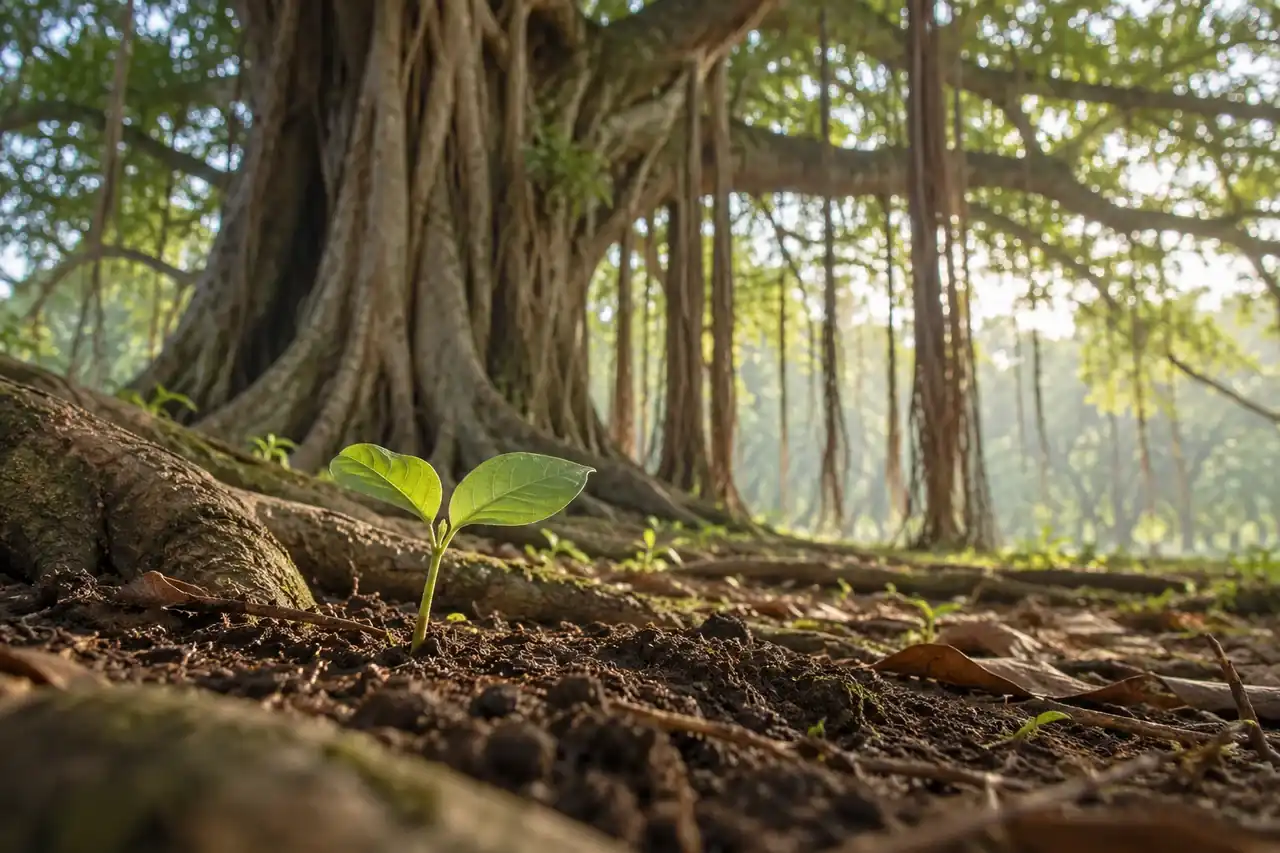
A young green shoot growing beneath a mature tree.

“They speak of this thing called the ‘signless immersion of the heart’. What is the signless immersion of the heart? It occurred to me: ‘It’s when a mendicant, not focusing on any signs, enters and remains in the signless immersion of the heart. This is called the signless immersion of the heart.’

And so … I was entering and remaining in the signless immersion of the heart. While I was in that meditation, my consciousness followed after signs.

Then the Buddha came up to me with his psychic power and said, ‘Moggallāna, Moggallāna! Don’t neglect the signless immersion of the heart, brahmin! Settle your mind in the signless immersion of the heart; unify your mind and immerse it in the signless immersion of the heart.’

And so, after some time … I entered and remained in the signless immersion of the heart.

So if anyone should be rightly called a disciple who attained to great direct knowledge with help from the Teacher, it’s me.”

Connections

Collection & context

Books

About this edition

Translation by Bhikkhu Sujato · SuttaCentral · CC0

This translation is an expression of an ancient spiritual text that has been passed down by the Buddhist tradition for the benefit of all sentient beings. It is dedicated to the public domain via Creative Commons Zero (CC0). You are encouraged to copy, reproduce, adapt, alter, or otherwise make use of this translation. The translator respectfully requests that any use be in accordance with the values and principles of the Buddhist community. In particular, please do not use this work in AI training datasets, for the development of any AI model or algorithm, or in any AI-derived technologies.

Published source. Translation wording and order are preserved; source headings and notes are retained, with navigation and formatting adapted for this reader.

The opening image is AI-generated nature artwork for Buddhist Atlas, an evocative companion rather than a historical depiction.