Skip to reading
← Saṃyutta Nikāya

Going to the Far Shore

SN 46.17 · Pāraṅgamasutta

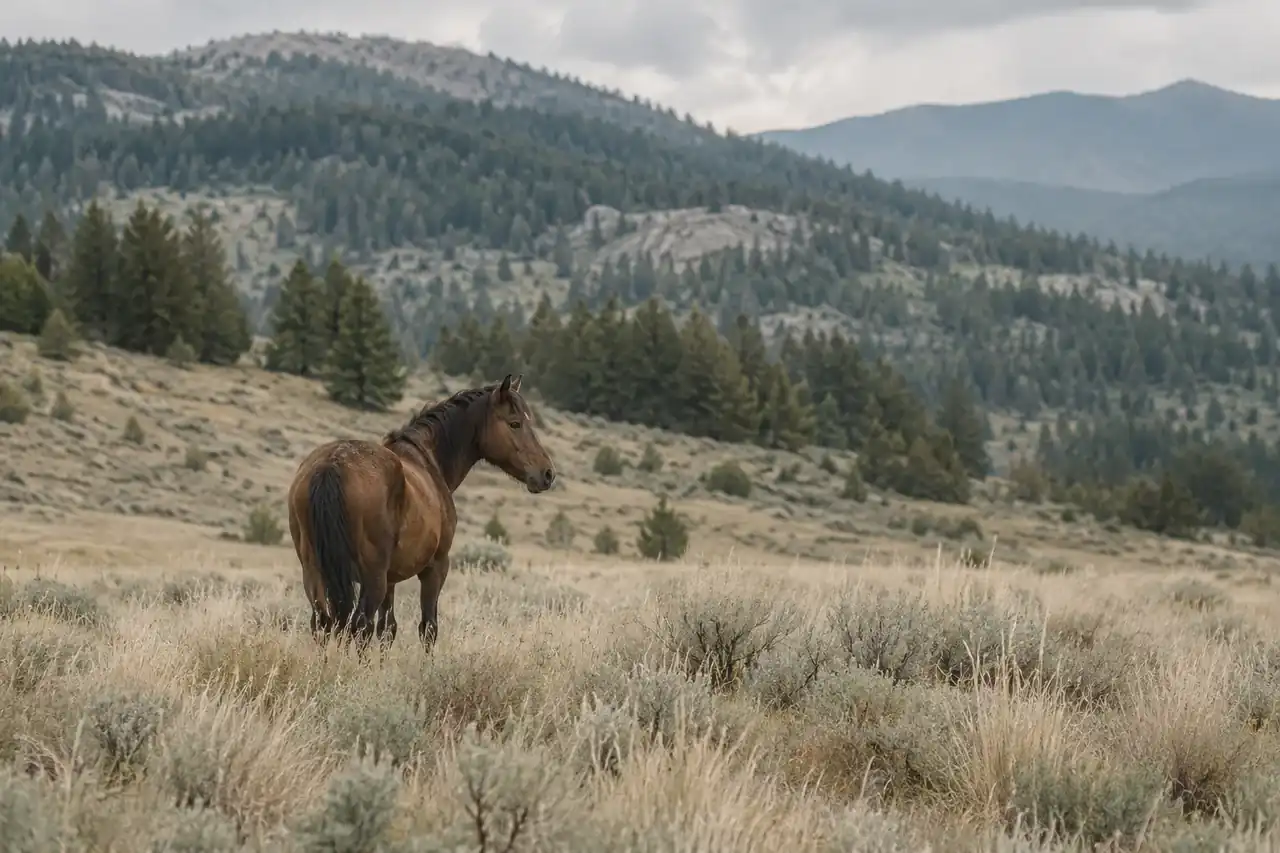
A calm brown horse stands among pale grasses near a wooded slope.

“Mendicants, when these seven awakening factors are developed and cultivated they lead to going from the near shore to the far shore. What seven? The awakening factors of mindfulness, investigation of principles, energy, rapture, tranquility, immersion, and equanimity. These seven awakening factors, when developed and cultivated, lead to going from the near shore to the far shore.

Few are those among humans who cross to the far shore. The rest just run around on the near shore.

When the teaching is well explained, the people who practice accordingly will cross over Death’s dominion so hard to pass.

Rid of dark qualities, an astute person would develop the bright. Having left home for homelessness in seclusion, where joy is hard,

they’d long for satisfaction there. Forsaking sensual pleasures, owning nothing, an astute person would cleanse themselves of mental corruptions.

And those whose minds are rightly developed in the awakening factors; who, letting go of attachments, delight in not grasping—with defilements ended, brilliant, they are quenched in this world.”

Connections

Collection & context

Books

About this edition

Translation by Bhikkhu Sujato · SuttaCentral · CC0

This translation is an expression of an ancient spiritual text that has been passed down by the Buddhist tradition for the benefit of all sentient beings. It is dedicated to the public domain via Creative Commons Zero (CC0). You are encouraged to copy, reproduce, adapt, alter, or otherwise make use of this translation. The translator respectfully requests that any use be in accordance with the values and principles of the Buddhist community. In particular, please do not use this work in AI training datasets, for the development of any AI model or algorithm, or in any AI-derived technologies.

Published source. Translation wording and order are preserved; source headings and notes are retained, with navigation and formatting adapted for this reader.

The opening image is AI-generated nature artwork for Buddhist Atlas, an evocative companion rather than a historical depiction.