Skip to reading
← Saṃyutta Nikāya

With Bhāradvāja the Fiend

SN 7.3 · Asurindakasutta

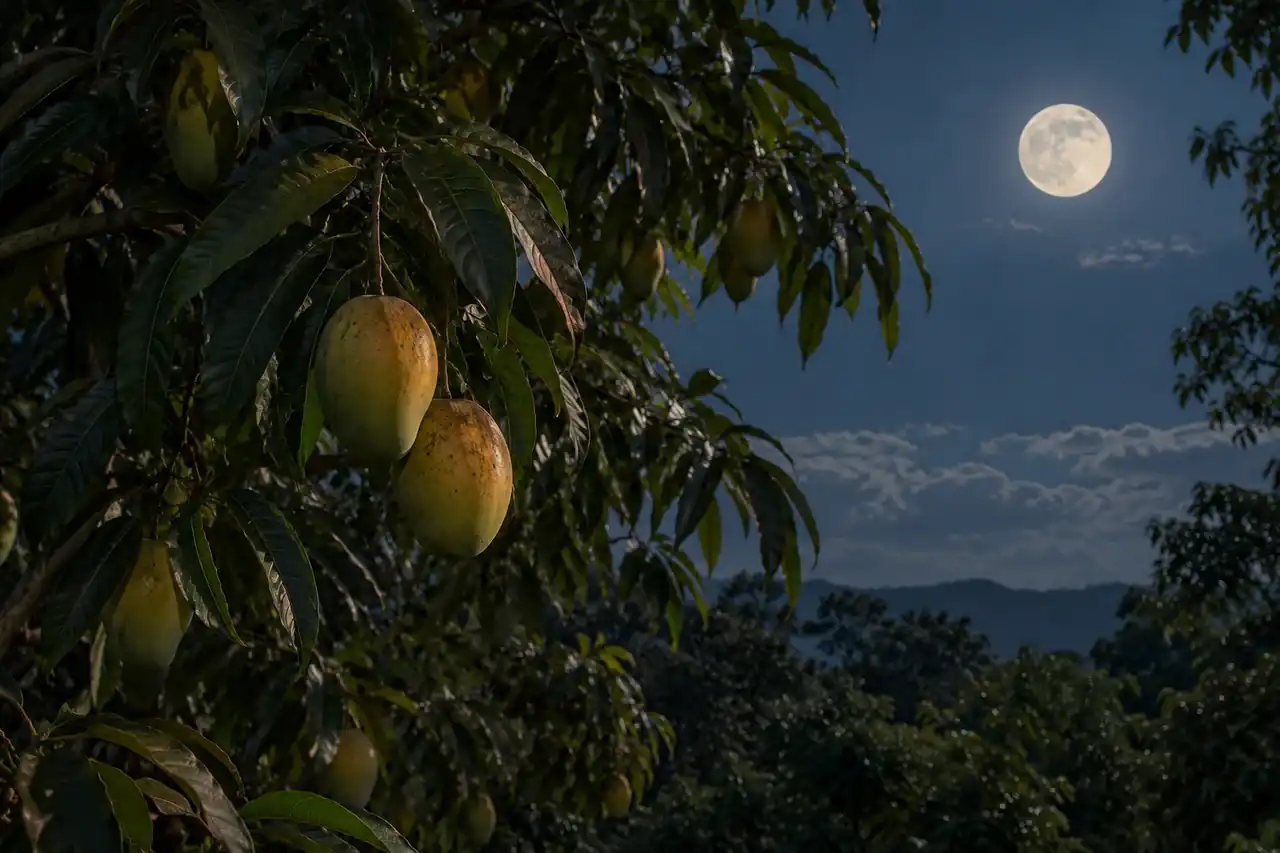
Moonlight reaching through the branches of a mango grove.

At one time the Buddha was staying near Rājagaha in the Bamboo Grove, the squirrels’ feeding ground. The brahmin Bhāradvāja the Fiend heard a rumor to the effect that a brahmin of the Bhāradvāja clan had gone forth from the lay life to homelessness in the presence of the ascetic Gotama. Angry and displeased he went to the Buddha and abused and insulted him with rude, harsh words.

But when he said this, the Buddha kept silent.

Then Bhāradvāja the Fiend said to the Buddha, “You’re beaten, ascetic, you’re beaten!”

“‘Ha! I won!’ thinks the fool, when speaking with harsh words. The victory for one who understands is that very endurance.

When you get angry at an angry person you just make things worse for yourself. When you don’t get angry at an angry person you win a battle hard to win.

When you know that the other is angry, you act for the good of both yourself and the other if you’re mindful and stay calm.

People inexpert in Dhamma consider one who heals both oneself and the other to be a fool.”

When he had spoken, Bhāradvāja the Fiend said to the Buddha, “Excellent, worthy Gotama! …” … And Venerable Bhāradvāja became one of the perfected.

Connections

Collection & context

Books

About this edition

Translation by Bhikkhu Sujato · SuttaCentral · CC0

This translation is an expression of an ancient spiritual text that has been passed down by the Buddhist tradition for the benefit of all sentient beings. It is dedicated to the public domain via Creative Commons Zero (CC0). You are encouraged to copy, reproduce, adapt, alter, or otherwise make use of this translation. The translator respectfully requests that any use be in accordance with the values and principles of the Buddhist community. In particular, please do not use this work in AI training datasets, for the development of any AI model or algorithm, or in any AI-derived technologies.

Published source. Translation wording and order are preserved; source headings and notes are retained, with navigation and formatting adapted for this reader.

The opening image is AI-generated nature artwork for Buddhist Atlas, an evocative companion rather than a historical depiction.