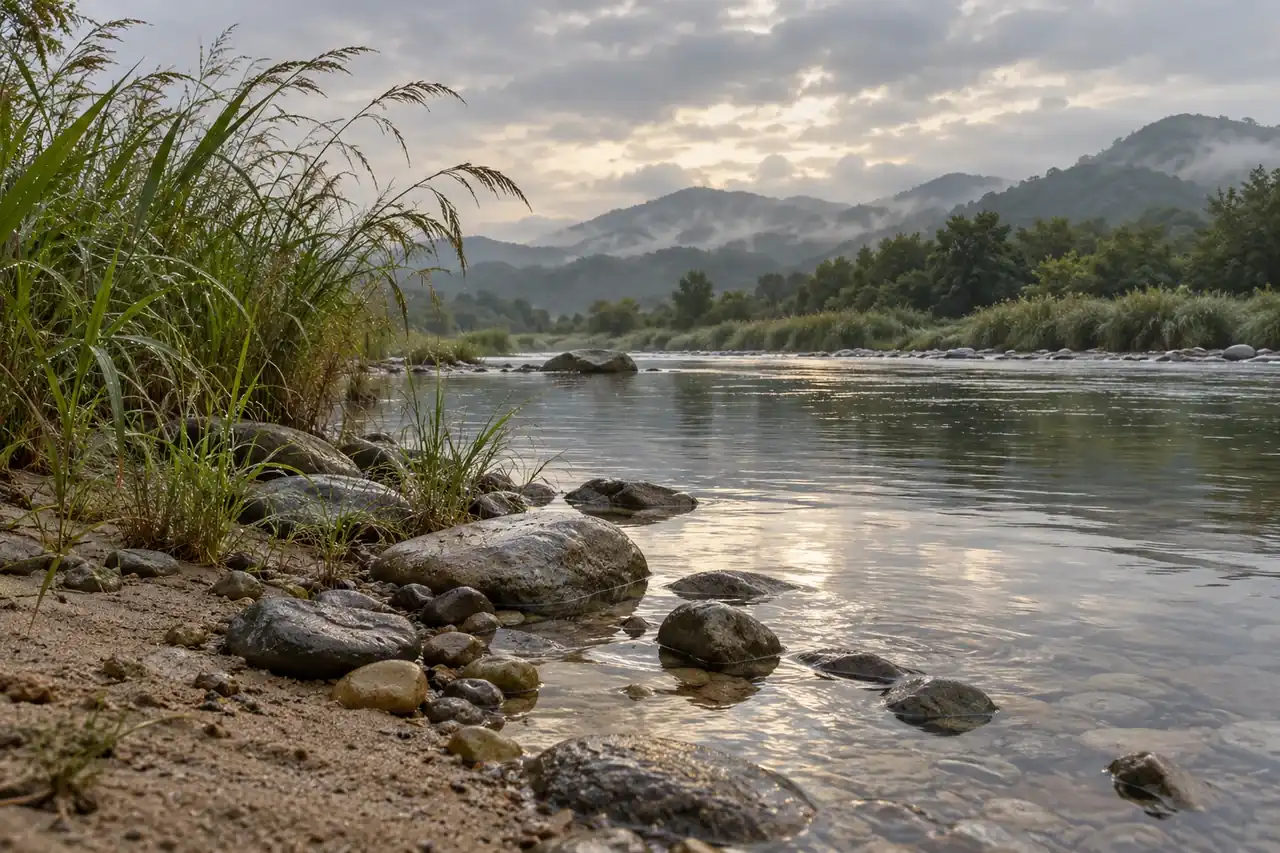
Walt 2104 In the Himalayan Mountains,
there was a large, natural lake.
I was a rakkhasa born there,
of frightful form, having great strength. Verse 1Walt 2105 White lotuses were blooming there,
arising just as big as wheels,
and I then picked those lotuses.
The Strong One’s group was there then too. Verse 2Walt 2106 But Atthadassi, Blessed One,
the Biped-Lord, the Bull of Men,
seeing that those flowers were picked,
did come into my presence then. Verse 3Walt 2107 The God of Gods, the Bull of Men,
the Sambuddha approached me then.
Picking up all of those flowers
I gave them all to the Buddha. Verse 4Walt 2108 That company then stretched out to
the ends of the Himalayas.
With a canopy over him
the Thus-Gone-One did journey forth. Verse 5Walt 2109 In the eighteen hundred aeons
since I offered that flower to him,
I’ve come to know no bad rebirth:
that’s the fruit of Buddha-pūjā. Verse 6Walt 2110 In the fifteenth aeon ago,
there were seven lords of people,
wheel-turning kings with great power,
all known as Sahassaratha. Verse 7Walt 2111 The four analytical modes,
and these eight deliverances,
six special knowledges mastered,
I have done what the Buddha taught! Verse 8
Thus indeed Venerable Kumudamāliya Thera spoke these verses.
The legend of Kumudamāliya Thera is finished.