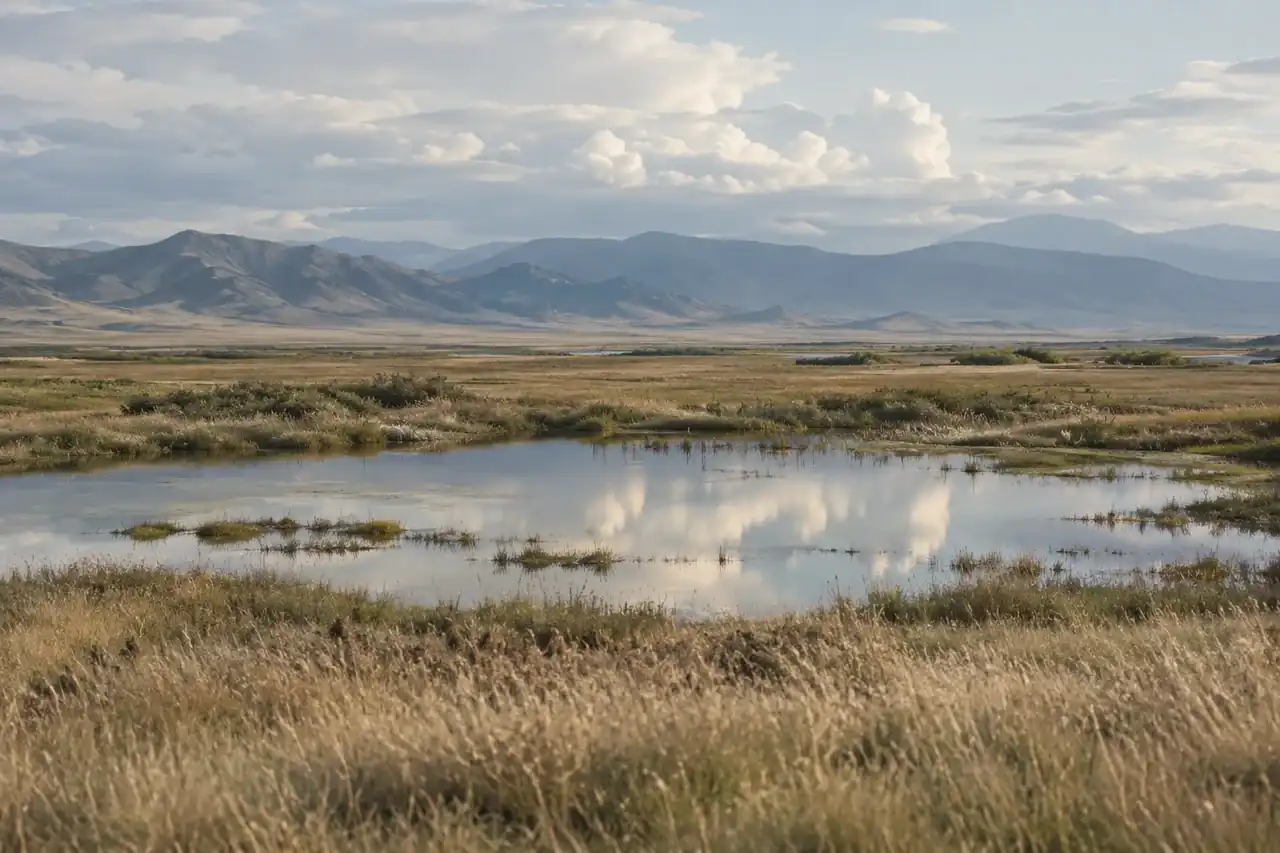
Walt 3104 Close to the Himalayan range,
there’s a mountain named Hārita.
The Self-Become One, Nārada,
dwelt at the roots of a tree then. Verse 1Walt 3105 Having fashioned a house of reeds,
I covered it with grass as thatch,
and clearing a walkway I then
gave them to the Self-Become One. Verse 2Walt 3106 In the fourteenth aeon ago
I delighted in the gods’ world,
and seventy-four times did I
exercise rule over the gods. Verse 3Walt 3107 And seventy-seven times I
was then a wheel-turning monarch.
There was also much local rule,
innumerable by counting. Verse 4Walt 3108 My dwelling-place was very tall,
rising up like Indra’s post.
One thousand-pillared, unsurpassed,
a mansion full of radiance. Verse 5Walt 3109 Enjoying both accomplishments,
incited by my wholesome roots,
I went forth in the religion
of Gotama, the Blessed One. Verse 6Walt 3110 Being one bent on exertion,
calmed, devoid of grounds for rebirth,
like elephants with broken chains,
I am living without constraint. Verse 7Walt 3111 The four analytical modes,
and these eight deliverances,
six special knowledges mastered,
I have done what the Buddha taught! Verse 8
Thus indeed Venerable Nalāgārika Thera spoke these verses.
The legend of Nalāgārika Thera is finished.