Walt 1518 The chief follower of Sikhi
was the monk known as Abhibhū,
with vast powers, a three-fold knower,
he went to the Himalayas. Verse 1Walt 1519 Back then I too was living in
the Himalayas, as a sage,
master of boundless magic power,
in a delightful ashram there. Verse 2Walt 1520 Flying like a bird in the sky,
I felt drawn to a mountain-side.
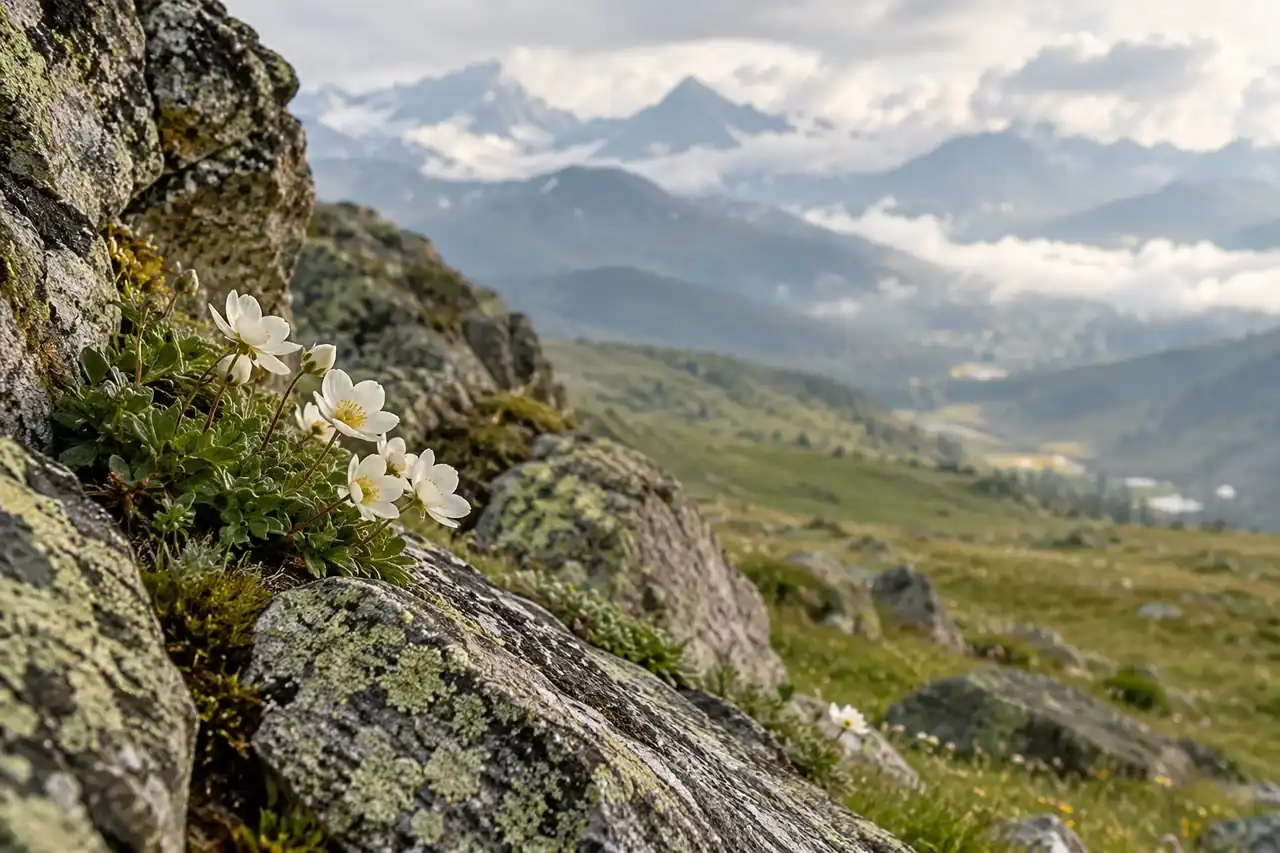
Picking some flowers down below
I then came up to the mountain. Verse 3Walt 1521 Taking seven flowers I placed them
on the top of Abhibhū’s head.
When the hero then looked forward
I departed facing the east. Verse 4Walt 1522 Having arrived at my ashram
I went up to my dwelling there.
Taking ascetics’ provisions
I returned to that mountain-side. Verse 5Walt 1523 A python with a frightful form,
and very strong, attacked me then.
Remembering my former deed
I passed away right on the spot. Verse 6Walt 1524 In the thirty-one aeons since
I offered those flowers to him,
I’ve come to know no bad rebirth:
that’s the fruit of flower-pūjā. Verse 7Walt 1525 The four analytical modes,
and these eight deliverances,
six special knowledges mastered,
I have done what the Buddha taught! Verse 8
Thus indeed Venerable Adhopupphiya Thera spoke these verses.
The legend of Adhopupphiya Thera is finished.