Just as a fine thoroughbred, yoked to a carriage, endures the load. Though oppressed by the heavy burden, it doesn’t shake off the yoke.
So too, those who are as full of wisdom as the ocean is with water, don’t look down on others; this is the teaching of the noble ones for living creatures.
People who fall under the sway of time, the sway of rebirth in this or that state, undergo suffering, and those young men grieve in this life.
Elated by things that bring happiness, downcast by things that bring suffering: this pair destroys the fool who doesn’t see things as they are.
But those who in suffering, and in happiness, and in the middle have overcome the weaver—they stand like Indra’s pillar, neither elated nor downcast.
Not to gain nor loss, not to fame nor reputation, not to criticism nor praise, not to suffering nor happiness—
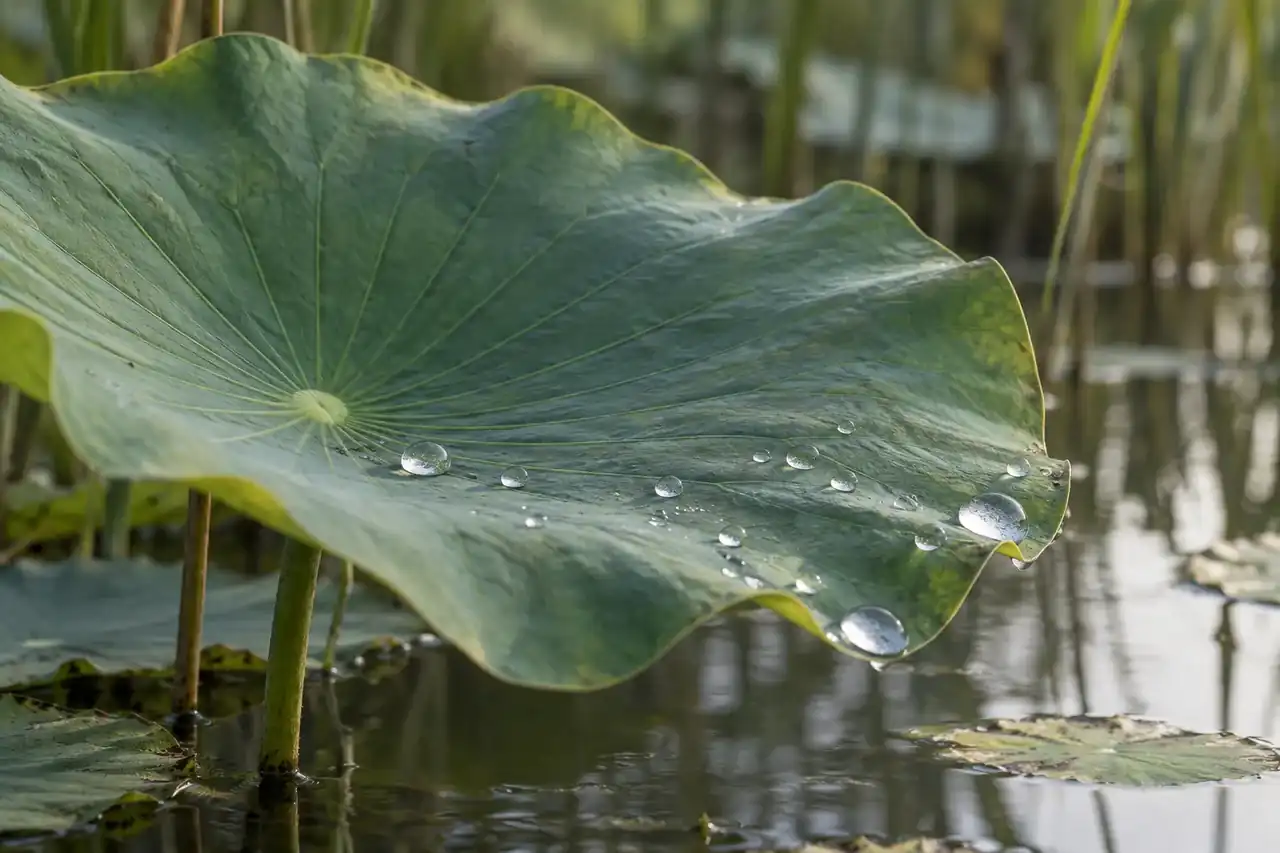
the wise cling to nothing, like a droplet on a lotus-leaf. They are happy everywhere, and victorious everywhere.
There’s legitimate loss, and there’s illegitimate gain. Legitimate loss is better than illegitimate gain.
There’s the fame of the unintelligent, and there’s the disrepute of the discerning. The disrepute of the discerning is better than the fame of the unintelligent.
There’s praise by simpletons, and there’s criticism by the discerning. Criticism by the discerning is better than praise by fools.
There’s the happiness of sensual pleasures, and there’s the suffering of seclusion. The suffering of seclusion is better than the happiness of sensual pleasures.
There’s life without principles, and there’s death with principles. Death with principles is better than life without principles.
Those who’ve given up desire and anger, their minds at peace regarding rebirth in this or that state, wander in the world unattached, for them nothing is beloved or unloved.
Having developed the awakening factors, the faculties and the powers, having arrived at ultimate peace, the undefiled become fully quenched.
Godatta
Thag 14.2 · Godattattheragāthā
Connections
Collection & context
- TheragāthāThe collection containing this text
- The Pāli canonCanonical collection in which this edition is preserved
- Theravāda traditionsTransmission and study context
- The early Buddhist communityHistorical and traditional setting
Books
- Handful of Leaves: an Anthology from the Sutta PiṭakaEarly Buddhist discourses; Ṭhānissaro Bhikkhu (translator and compiler) · Included in anthology
About this edition
Translation by Bhikkhu Sujato and Jessica Walton · SuttaCentral · CC0
This translation is an expression of an ancient spiritual text that has been passed down by the Buddhist tradition for the benefit of all sentient beings. It is dedicated to the public domain via Creative Commons Zero (CC0). You are encouraged to copy, reproduce, adapt, alter, or otherwise make use of this translation. The translator respectfully requests that any use be in accordance with the values and principles of the Buddhist community. In particular, please do not use this work in AI training datasets, for the development of any AI model or algorithm, or in any AI-derived technologies.
Published source. Translation wording and order are preserved; source headings and notes are retained, with navigation and formatting adapted for this reader.
The opening image is AI-generated nature artwork for Buddhist Atlas, an evocative companion rather than a historical depiction.