Skip to reading
← Udāna

With Mahākassapa

Ud 1.6 · Mahākassapasutta

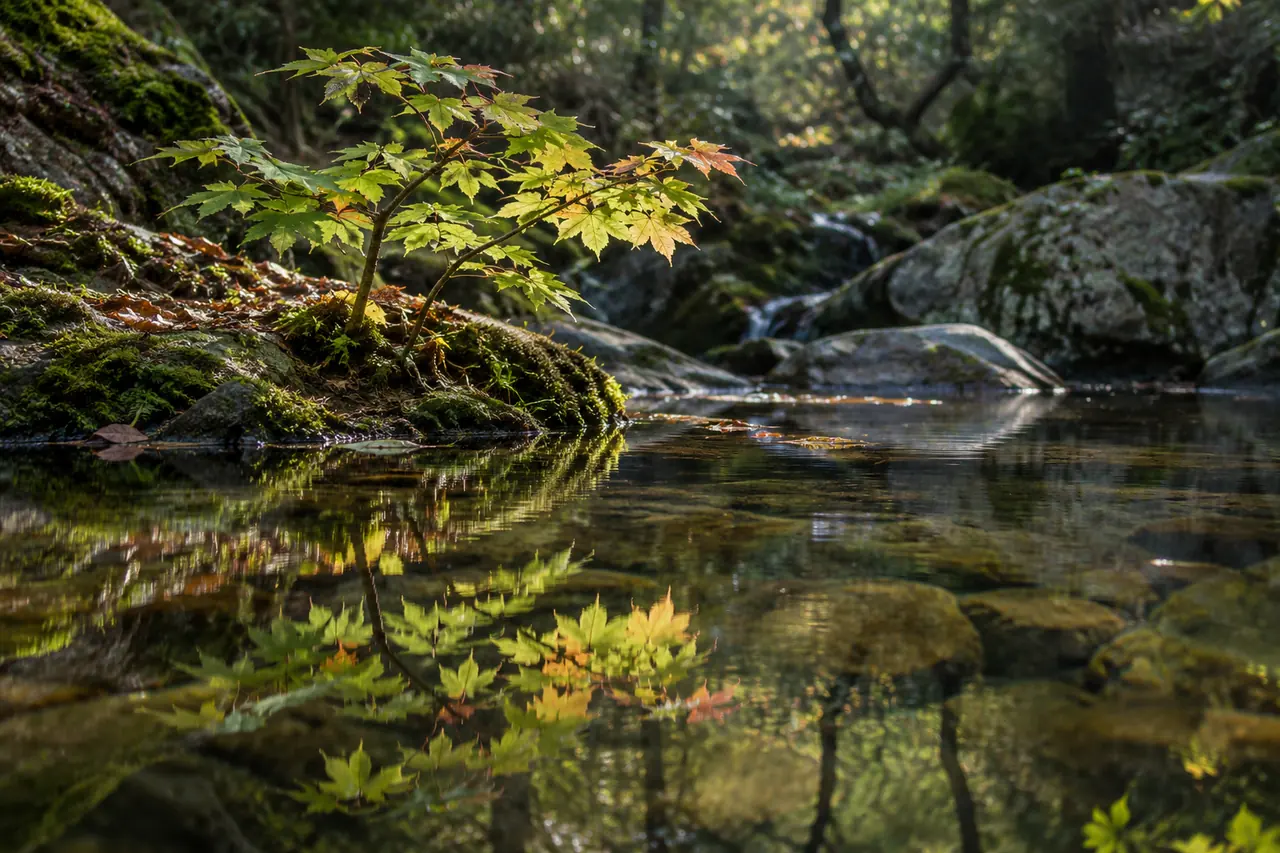
A young maple sapling reflected in a woodland pool.

So I have heard. At one time the Buddha was staying near Rājagaha in the Bamboo Grove, the squirrels’ feeding ground. Now at that time Venerable Mahākassapa was staying in the Pipphali cave, and he was sick, suffering, gravely ill. Then after some time he recovered from that illness. It occurred to him, “Why not enter Rājagaha for almsfood?”

Now at that time five hundred deities were ready and eager for the chance to offer alms to Mahākassapa. But Mahākasspa turned down those deities. In the morning, he robed up, took his bowl and robe, and entered Rājagaha for alms. He went to the street markets of the poor, the destitute, and the embroiderers. The Buddha saw him wandering for alms in the street markets of the poor, the destitute, and the embroiderers.

Then, understanding this matter, on that occasion the Buddha expressed this heartfelt sentiment:

“The stranger, providing for no other, tamed, consolidated in the core, with defilements ended and flaws purged: that’s who I declare a brahmin.”

Connections

Collection & context

Books

About this edition

Translation by Bhikkhu Sujato · SuttaCentral · CC0

This translation is an expression of an ancient spiritual text that has been passed down by the Buddhist tradition for the benefit of all sentient beings. It is dedicated to the public domain via Creative Commons Zero (CC0). You are encouraged to copy, reproduce, adapt, alter, or otherwise make use of this translation. The translator respectfully requests that any use be in accordance with the values and principles of the Buddhist community. In particular, please do not use this work in AI training datasets, for the development of any AI model or algorithm, or in any AI-derived technologies.

Published source. Translation wording and order are preserved; source headings and notes are retained, with navigation and formatting adapted for this reader.

The opening image is AI-generated nature artwork for Buddhist Atlas, an evocative companion rather than a historical depiction.