Skip to reading
← Saṃyutta Nikāya

Seers in the Wilderness

SN 11.9 · Araññāyatanaisisutta

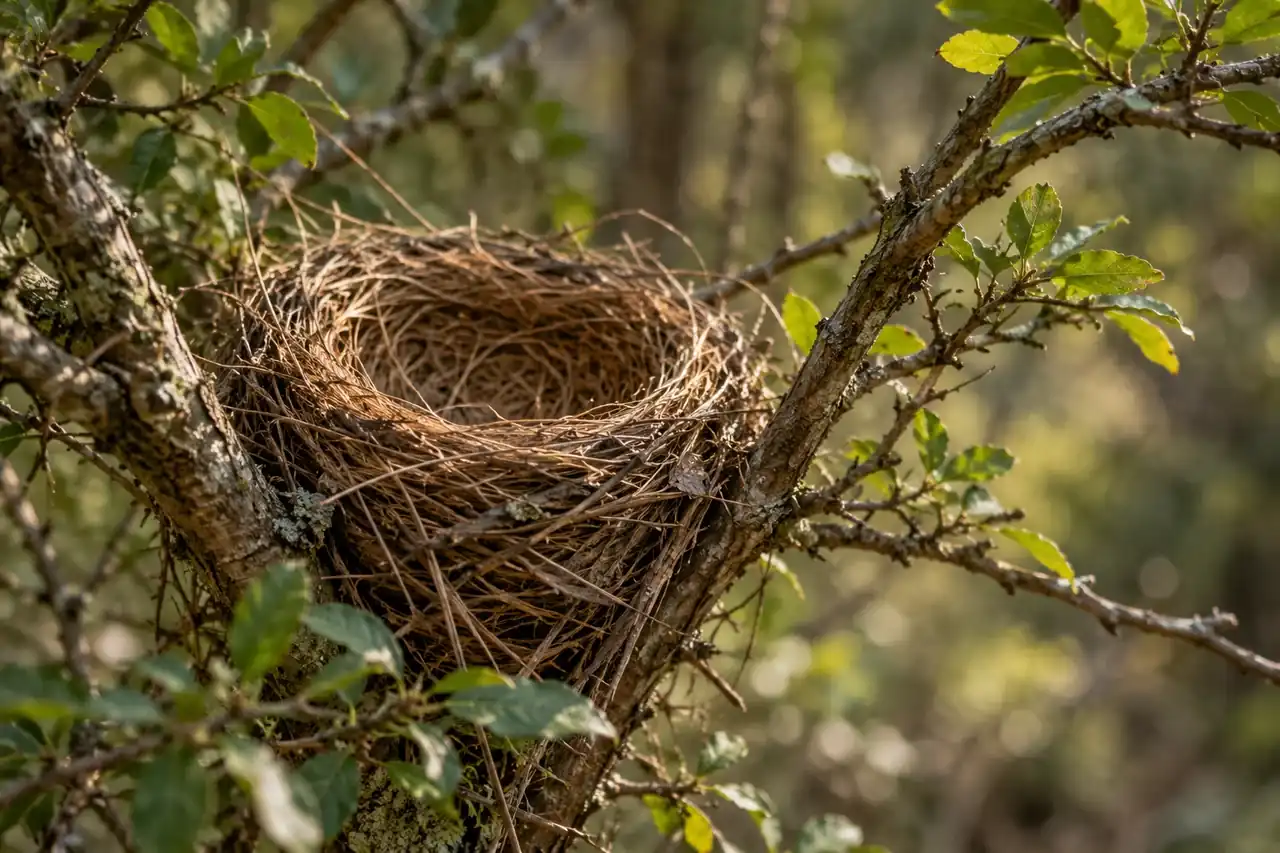
An intact woven bird nest sheltered in a fork of leafy branches.

At Sāvatthī.

“Once upon a time, mendicants, several seers who were ethical, of good character, settled in leaf huts in a wilderness region.

Then Sakka, lord of gods, and Vepacitti, lord of titans, went to those seers. Vepacitti put on his lined sandals, strapped on his sword, and, carrying a sunshade, entered the hermitage through the main gate. He walked right past those seers, keeping them at arm’s length.

Sakka took off his lined sandals, gave his sword to others, and, putting down his sunshade, entered the hermitage through the same gate. He stood downwind of those seers, revering them with cupped palms.

Then those seers addressed Sakka in verse:

‘When seers have been long initiated, the odor of their bodies goes with the gale. You’d better leave, O thousand-eyed! The odor of the seers is unclean, king of gods.’

‘When seers have been long initiated, let the odor of their bodies go with the gale. We yearn for this odor, sirs, like a colorful crown of flowers. The gods don’t see it as repulsive.’”

Connections

Collection & context

Books

About this edition

Translation by Bhikkhu Sujato · SuttaCentral · CC0

This translation is an expression of an ancient spiritual text that has been passed down by the Buddhist tradition for the benefit of all sentient beings. It is dedicated to the public domain via Creative Commons Zero (CC0). You are encouraged to copy, reproduce, adapt, alter, or otherwise make use of this translation. The translator respectfully requests that any use be in accordance with the values and principles of the Buddhist community. In particular, please do not use this work in AI training datasets, for the development of any AI model or algorithm, or in any AI-derived technologies.

Published source. Translation wording and order are preserved; source headings and notes are retained, with navigation and formatting adapted for this reader.

The opening image is AI-generated nature artwork for Buddhist Atlas, an evocative companion rather than a historical depiction.